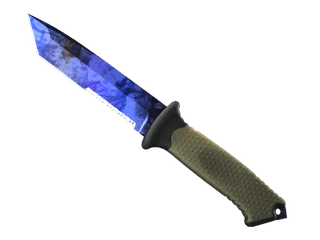
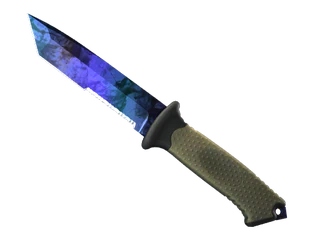
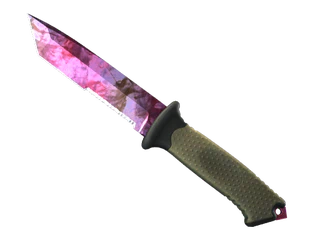
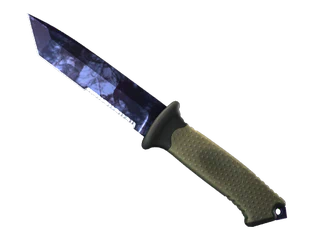
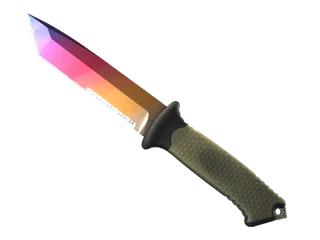
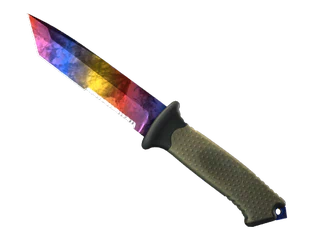
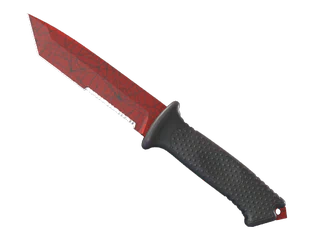
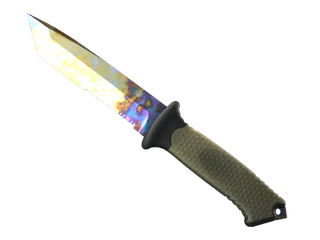
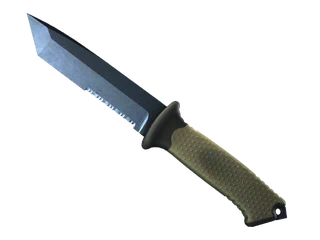
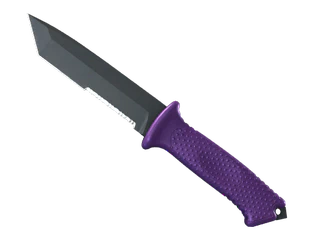
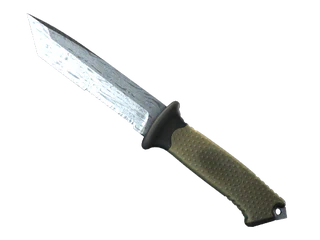
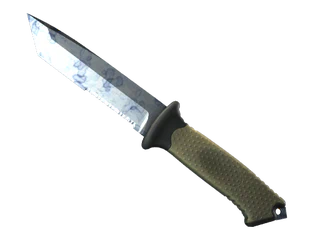
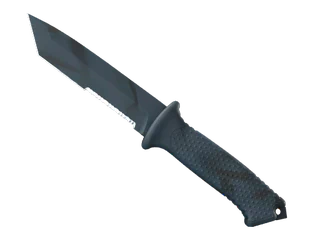
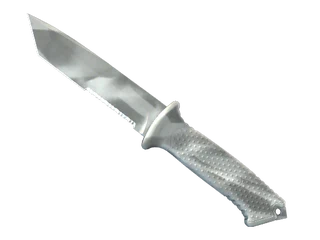
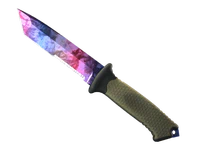
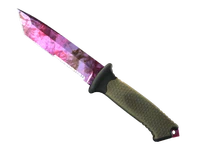
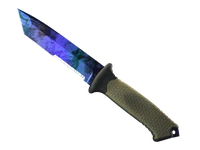
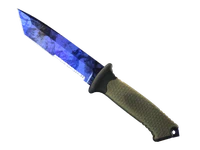
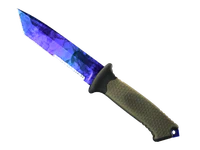
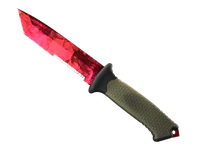
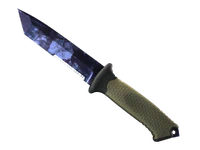
This Ursus Knife | Doppler Phase One sits squarely at the premium end of the ladder, where clean copies still draw serious attention and the market price holds firm. Capped floats and phase demand make the upper rungs the only place to expect yield when you sell, while the rest of the ladder trades more quietly.
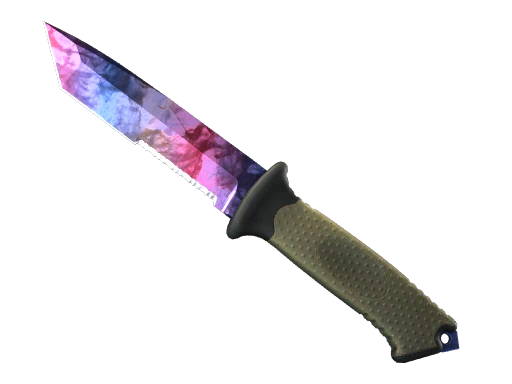
This Ursus Knife | Doppler Phase One sits squarely at the premium end of the ladder, where clean copies still draw serious attention and the market price holds firm. Capped floats and phase demand make the upper rungs the only place to expect yield when you sell, while the rest of the ladder trades more quietly.
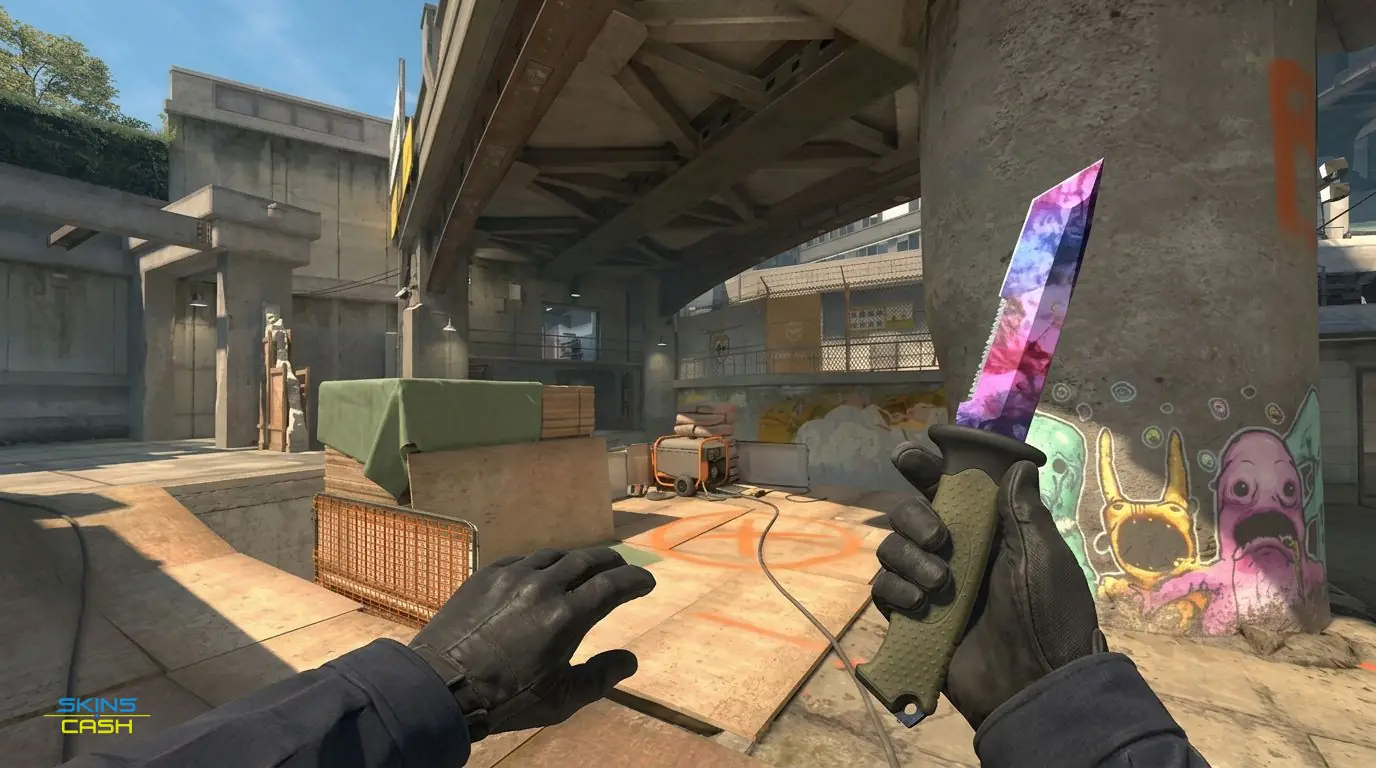

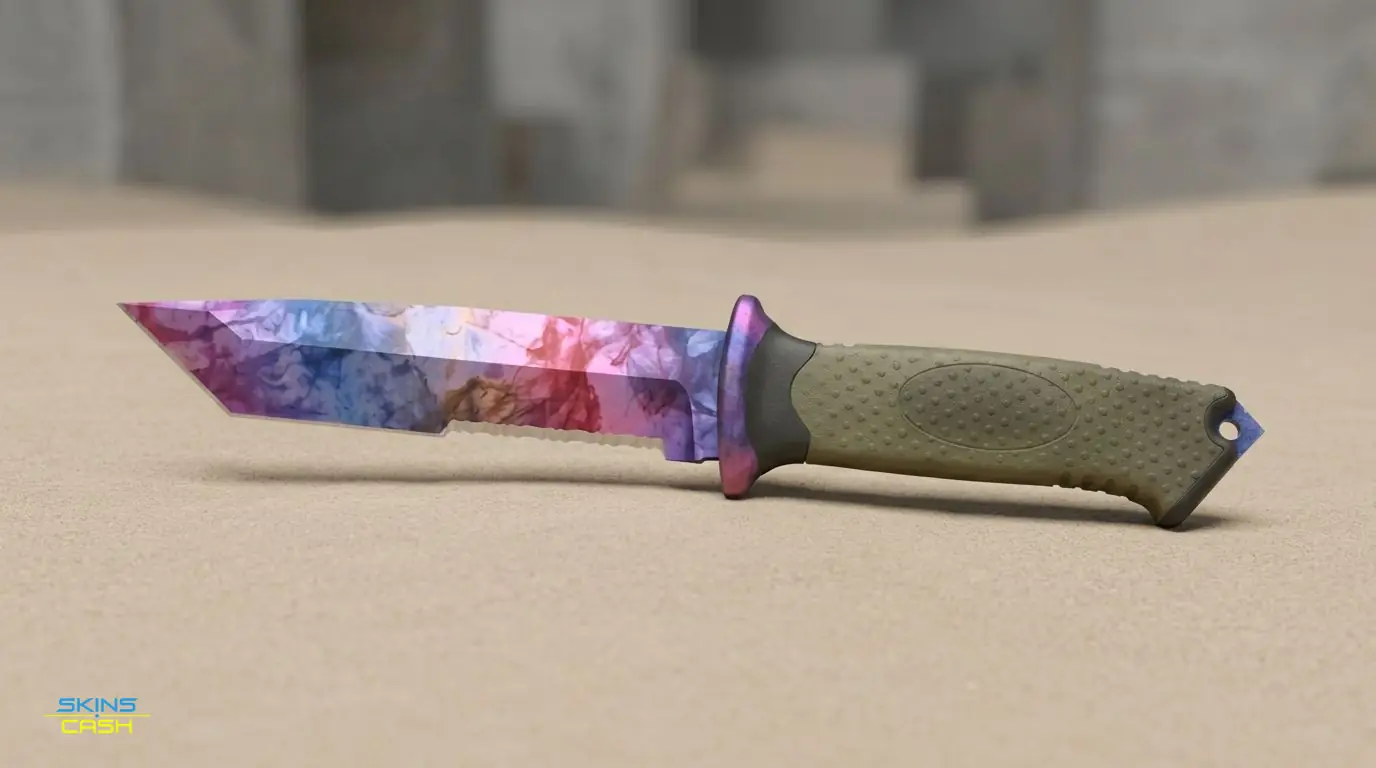
Premium skin with Covert rarity and a designer name that moves attention, this knife trades among high-value tools rather than budget toys. That positioning means fewer buyers but deeper pockets - sell with the expectation of selective interest rather than broad turnover.
The ladder is a classic clean-end weighted curve: strong concentration near the best-looking copies and a stepped descent afterward. The capped float profile compresses the bottom end, so the payout gap between the very clean and the rest is sharper than you might expect.
Listings often carry a headline that buyers rarely meet; the difference is the execution and platform take. On Skins.Cash you should expect a notable gap between sticker and net, driven by the premium bracket and low buyer volume for top-phase pieces.
Mid-clean copies give the best skin-for-money trade - they show the Doppler luster without the premium tax that the pristine rungs demand. Once you cross into the very clean tier, the incremental payout flattens; you pay more for marginal visual gain.
Because this finish does not span the full float spectrum, the so-called worst copies still hold a cleaner look than typical knives. That compression makes lower-wear steps behave like a narrower mini-ladder rather than a long tail of poor examples.
StatTrak exists and follows its own appetite: buyers pay for the counter, but the premium is not uniform across the ladder. With StatTrak inversion in play, some lower-clean ST copies can fetch closer to non-ST clean ones, so treat ST as a parallel curve when pricing.
Phase One matters here - certain phase faces and seeds pull a tangible uplift beyond float alone. Check the Doppler phase clarity and any standout pigment placement before you list; patterns carry real money on this finish.
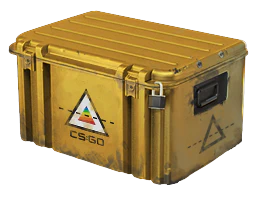
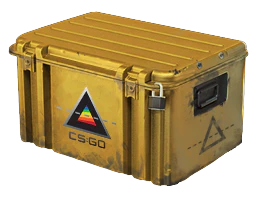
This knife comes from the Prisma Case, which puts it in a known supply bucket that collectors watch. That origin limits the pool and helps maintain a narrower, more predictable float set compared with open market rarities.
Blue and Purple play well on an anodized multicolored field; the finish reads vibrant under most maps and keeps contrast with hand models. Valve's design language shows through cleanly - saturated shifts and a metallic sheen that photographs and in-game lighting favor.
All-time trading has shown a wide band from quiet listings to occasional spikes at the clean end. Current levels sit somewhere inside that broad band, leaving room on either side for movement depending on buyer appetite.
Given the wide historical band and a long-term downward drift, prices can swing when a high-quality copy hits the market but otherwise hold flat. If you need liquidity, expect periods of quiet punctuated by sudden, narrow buying windows.
Place asks that respect the stepped lower-tier spread and the premium top rungs; aggressive undercuts bleed value in this bracket. Work the live price block, ladder your asks up from the floor, and lean on the Phase One specifics to justify tiered pricing.