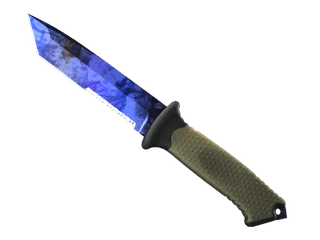
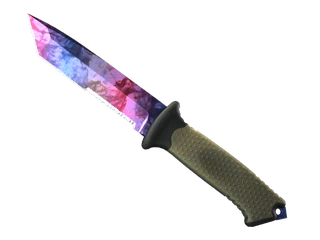
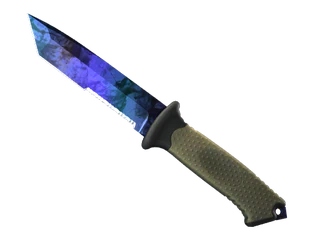
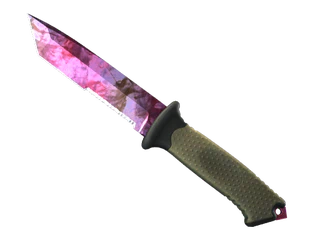
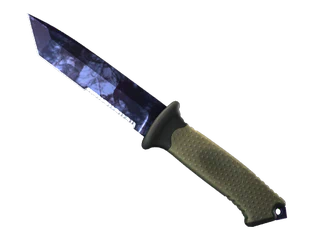
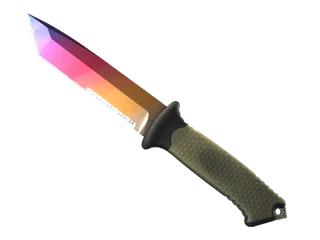
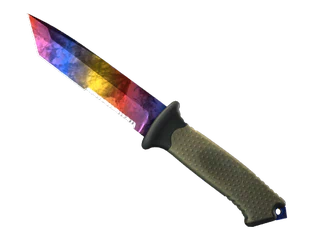
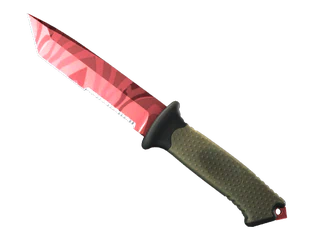
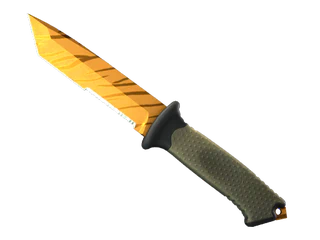
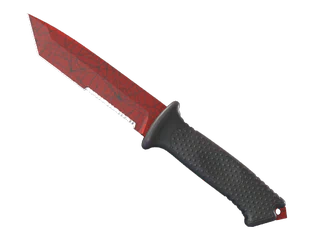
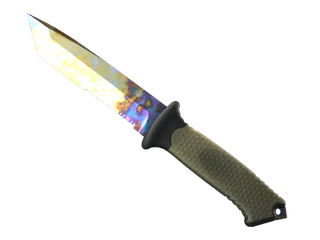
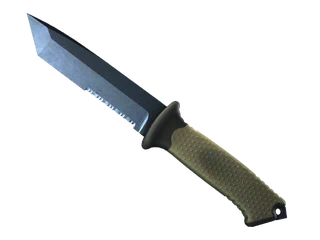
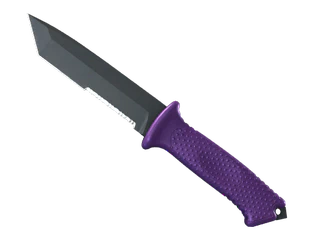
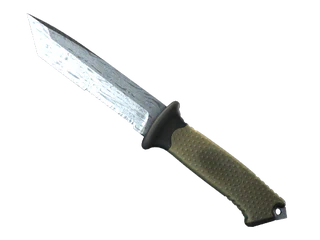
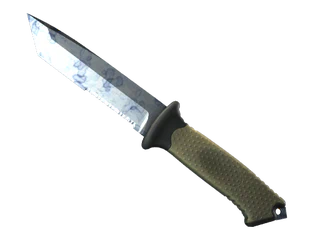
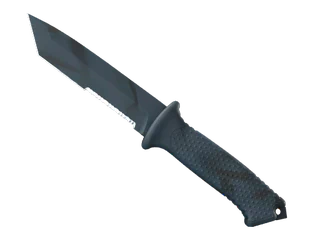
This Ursus Knife sits squarely in the mid bracket with thin demand and a weak floor, so liquidity is cautious and listings can sit. If you hold a clean Patina blade the few active buyers are specific; worn copies trade through a tighter band and move slower across the market.
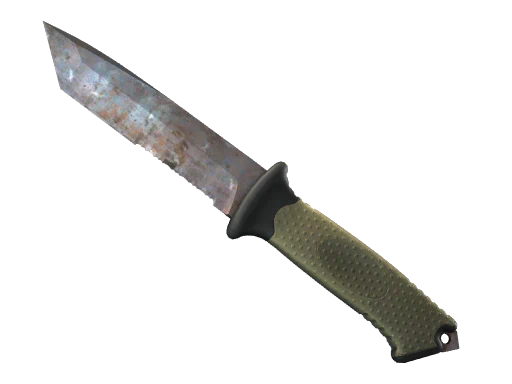
This Ursus Knife sits squarely in the mid bracket with thin demand and a weak floor, so liquidity is cautious and listings can sit. If you hold a clean Patina blade the few active buyers are specific; worn copies trade through a tighter band and move slower across the market.
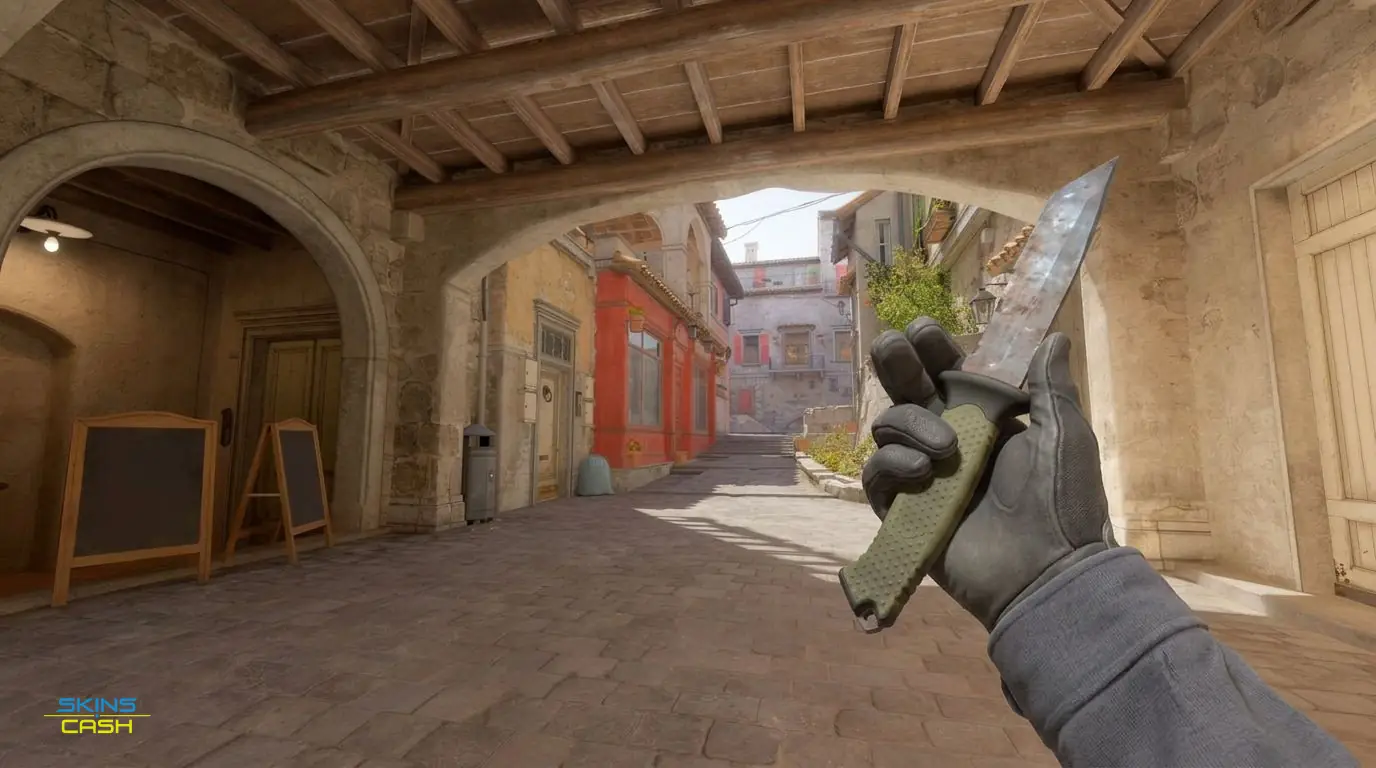
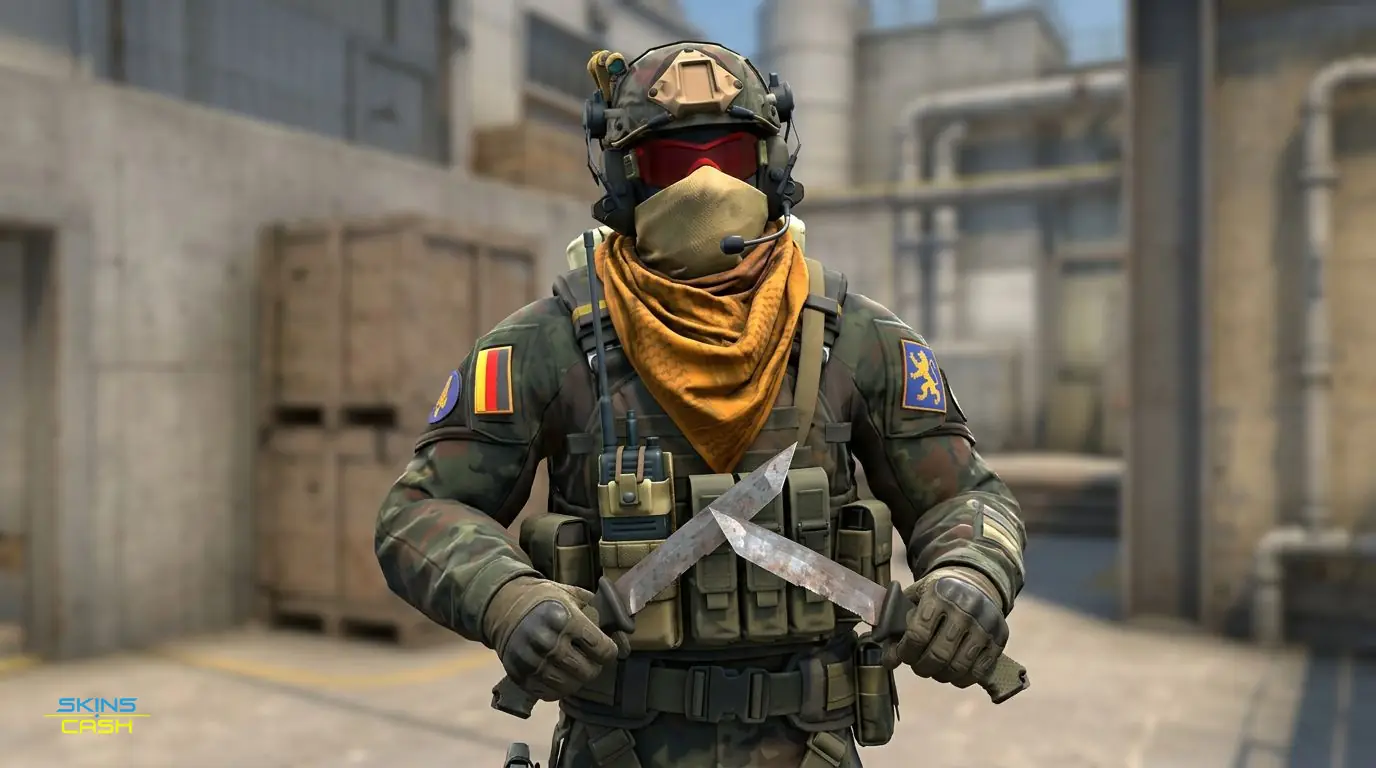
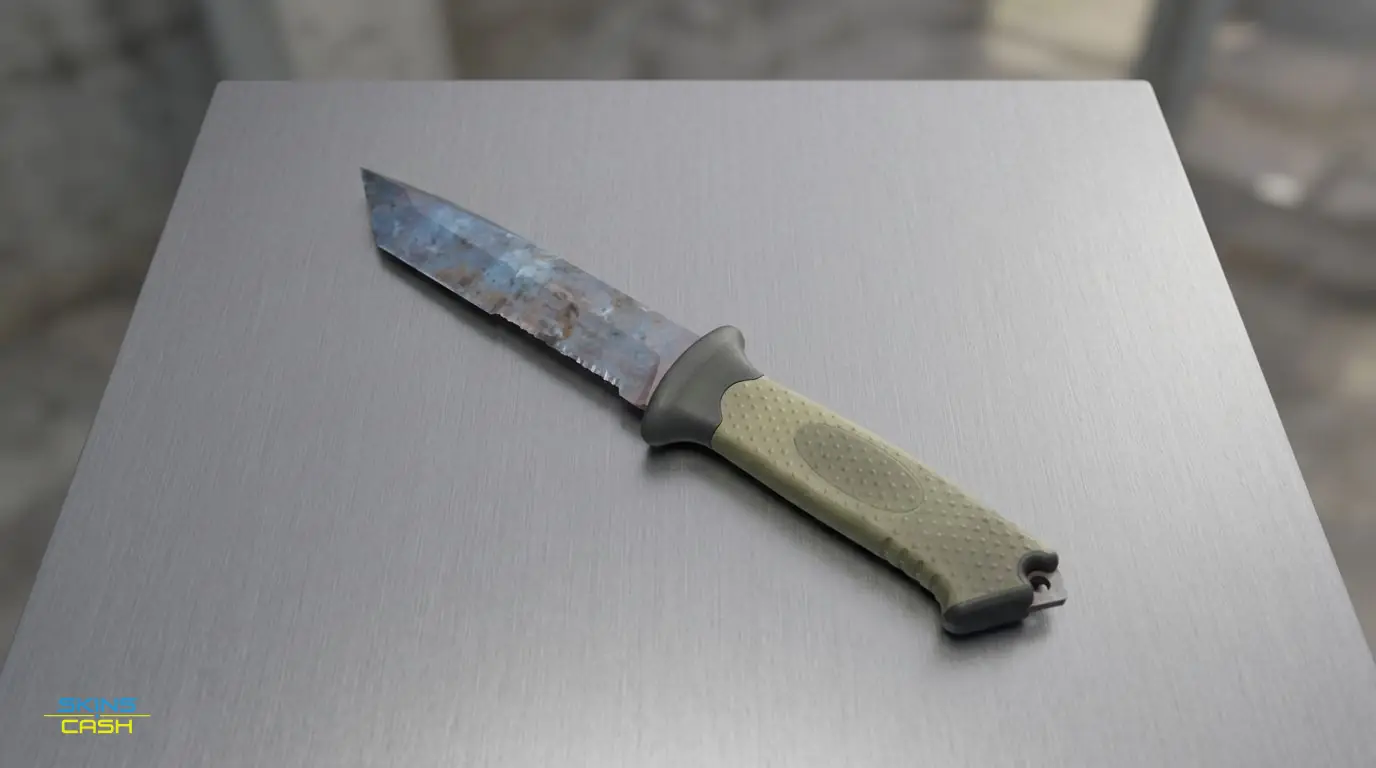
Mid-tier Covert territory: not grail money, but not budget either. The Prisma Case origin and Valve design mean it has steady recognition, yet the market lacks strong bids, so a seller should expect selective interest rather than a rush of offers.
The payout curve is capped and leans toward the clean end with a noticeable cliff near top-condition copies. That cap makes the premium concentrated, while the rest of the ladder slides down in a flatter run rather than a smooth, even slope.
Worn Patina blades sit in a tight cluster, so the worn-to-battle stage pays similarly and float differences there rarely change how buyers view the piece. Holders of worn copies can expect small incremental movement rather than leaps when they list.
Expect listings to show a higher sticker than the cash a seller nets: the spread widens because demand is thin and takers are scarce. On Skins.Cash you need to price with that gap in mind to avoid sitting with stale listings.
Patina shows wear subtly on the face and edges, and visible degradation nudges collectors more than casual buyers. Clean blades still draw the focused bidders; mid and low wears are tolerated by most players who care more about the silhouette than mirror shine.
StatTrak copies exist and they follow their own demand curve separate from normal stock. The tracking feature attracts a different buyer set and typically trades with a consistent premium above regular copies, but turnover is slower.
There is no pattern-based pricing to second-guess here; the Patina finish and Gray palette leave little room for seed quirks to sway value. Float and condition are the straightforward levers sellers should use when pricing.
The gray Patina finish reads muted and tactical in game, leaning on subdued tones rather than flash. That makes the blade work across loadouts and keeps it appealing to players who prefer understated steel over bright accents.
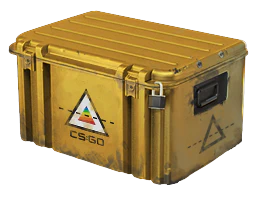
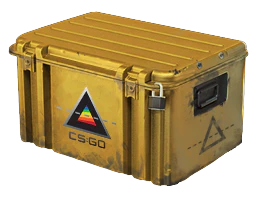
This knife drops from the Prisma Case, so supply is tied to that container's circulation rather than a standalone release. Case availability filters how often fresh copies hit the market.
The trend has been downward and re-rating has been evident across the year, softening bids and thinning out aggressive buyers. Long-term interest exists, but momentum is currently pointing the wrong way for sellers hoping for appreciation.
List with a spread mindset: price a touch above the cashout expectation and wait for the targeted buyer, rather than chasing quick hits into the bid side. Use the cashout tools to time exits and avoid slicing into the spread out of impatience.
The community respects the Ursus silhouette and the f0rest association adds a modest credibility boost among collectors. Overall sentiment is lukewarm-players like the look, but it does not ignite large-scale demand.