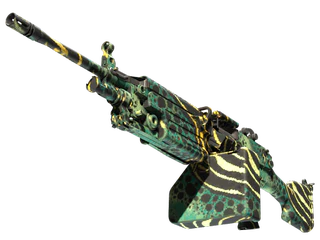
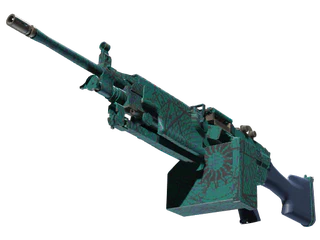
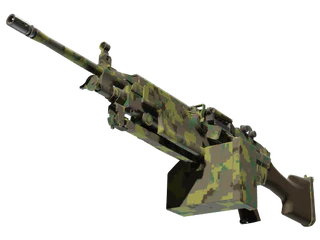
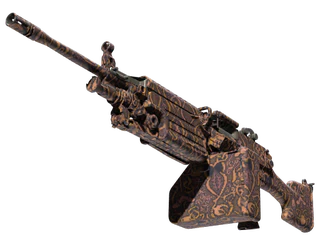
A budget restricted with a thin-market profile: most movement happens at the very clean end while the bulk sits cheap and quiet. StatTrak copies trade under a different logic, and the cashout calculus needs a careful look at spread and the capped float behavior.


A budget restricted with a thin-market profile: most movement happens at the very clean end while the bulk sits cheap and quiet. StatTrak copies trade under a different logic, and the cashout calculus needs a careful look at spread and the capped float behavior.
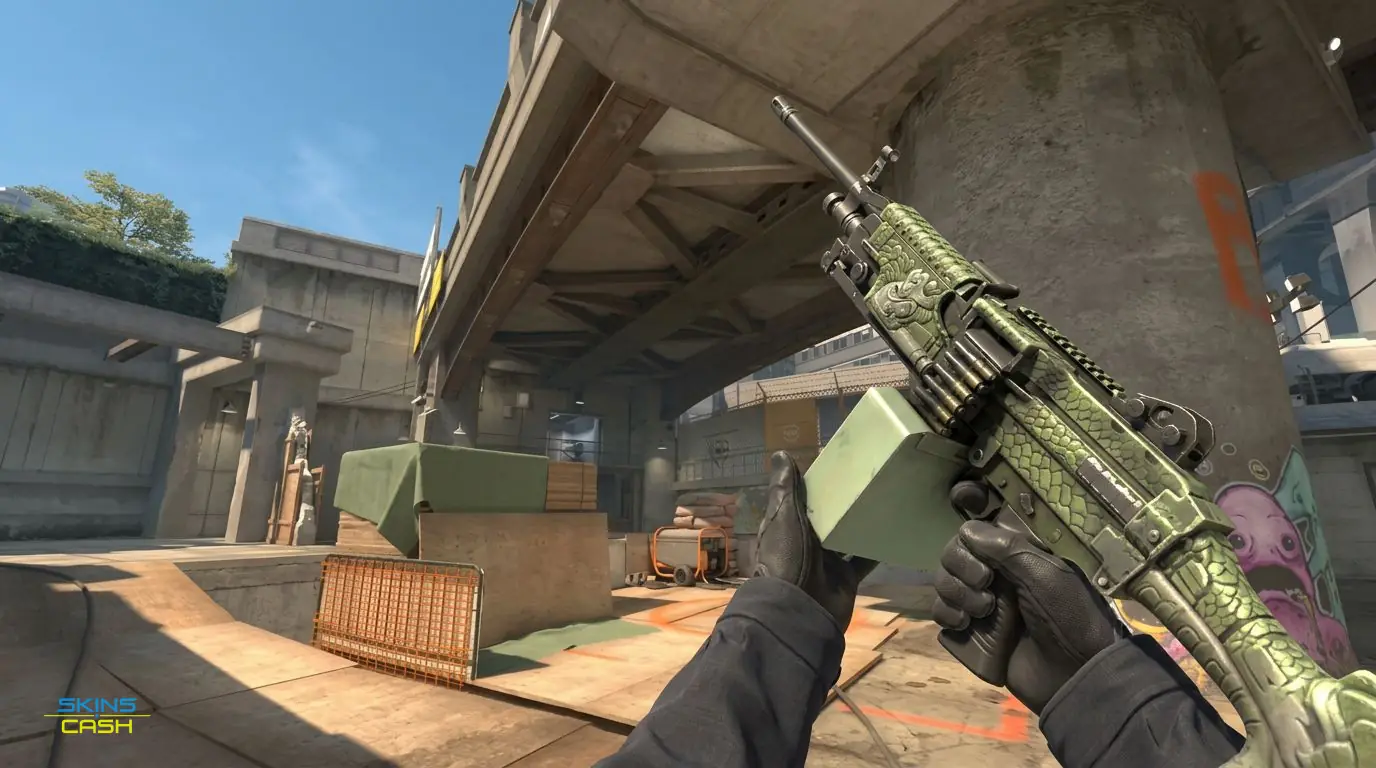

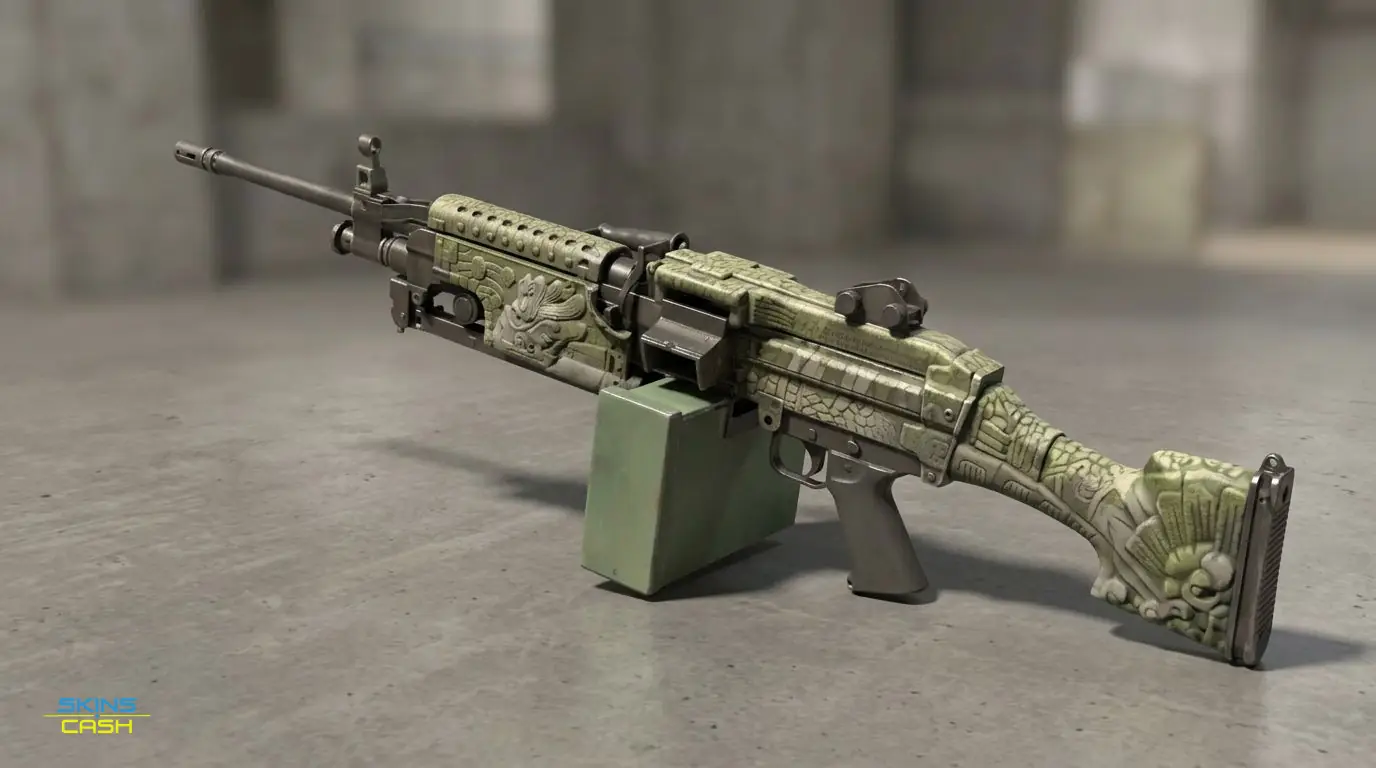
This Aztec patina sits squarely in the budget bracket among restricted machineguns, attractive to collectors who want a green palette without the spend of higher tiers. Expect moderate floor support but thin activity; sellers encounter few quick bids and must pick their moments when the tiny pool of serious buyers lines up.
The ladder is capped and stepped, not smooth; price steps occur at clean thresholds more than along a gentle slope. Lower tiers show a visible plateau while the top end ticks away in a tighter band, so the payout curve looks like a staircase with a pronounced cap at the clean finish.
Top-wear Aztec examples carry an extreme premium relative to the rest of the ladder, trading for multiples above the common rung. Clean pieces attract the handful of buyers who chase patina perfection on a green canvas designed by Sparkwire, which is why those copies concentrate disproportionate value.
Ask prices on listings sit above what you actually net; the market here is thin, so spreads are wide and cashout will feel lower than sticker prices suggest. Stattrak inversion further widens that gap because the StatTrak ledger trades on a different demand curve and buyers price that divergence in their offers.
This patina shows its quality in wear quite clearly: small jumps toward a cleaner finish materially improve the look, while dirtier wear blunts the green highlights. Buyers are pickier about the clean face; mid and lower wear copies read plainly as budget pieces.
There is no pattern noise to argue over; the finish has no pattern index quirks, so you price by float and StatTrak state alone. That removes the seed lottery and keeps the valuation straightforward for anyone who checks wear bands.
This Aztec comes from the CS case tied to the commemorative collection, which keeps fresh supply steady but not overwhelming. The origin explains why there are reliable drops of lower-wear copies and only a thin trickle of the clean, sought-after examples.
Short term the skin has been moving down hard after a long up hard trend over the larger window, so the current market reads like a retrace into a wide historical range. Sellers should expect softer interest right now compared with the past appreciation run.
List above the buyer noise and let the spread work for you; with a thin market, undercutting to sell quickly often hands value to patient buyers. Place offers mindful of the capped ladder and the StatTrak inversion so you don't force a sale at the lower plateau.
Collectors treat the Aztec patina as a niche green pick from Sparkwire, appreciated for its finish rather than headline rarity. Enthusiasts who like painted patinas will pay up for the clean face, but broader demand is limited and mostly driven by aesthetic buyers rather than mass speculation.