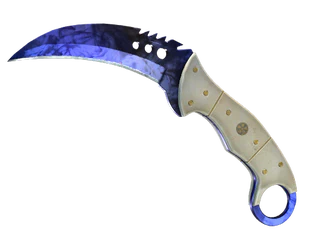
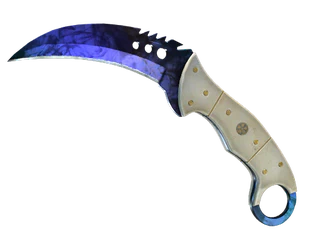
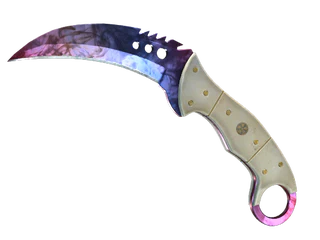
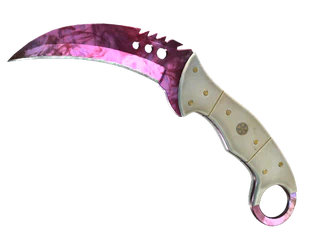
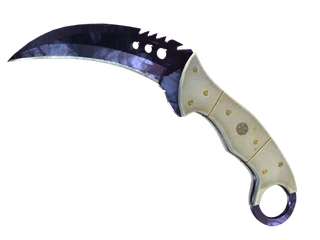
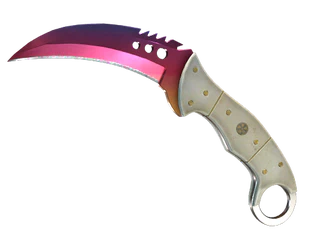
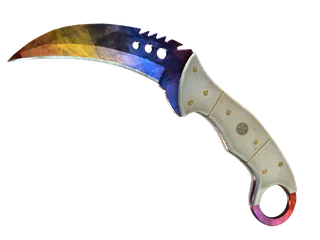
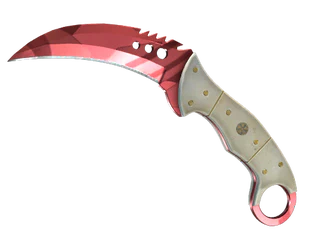
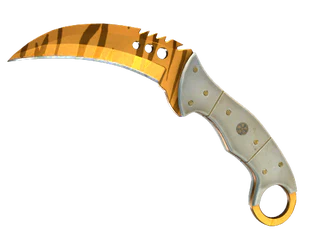
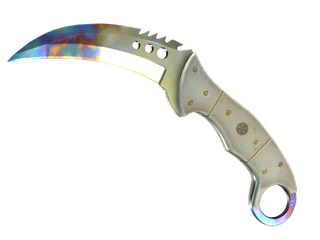
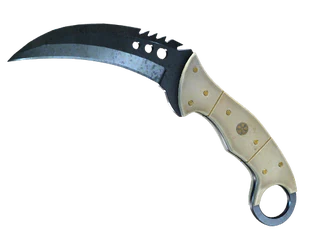
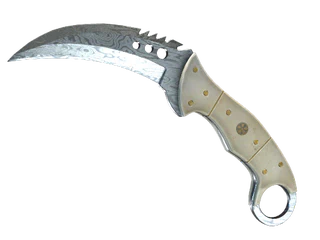
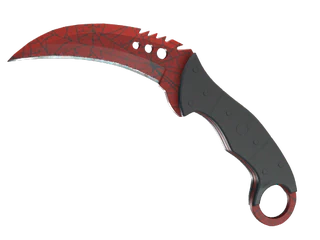
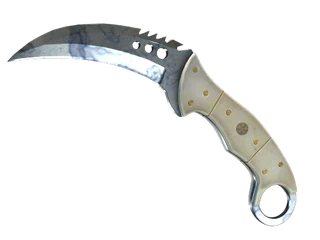
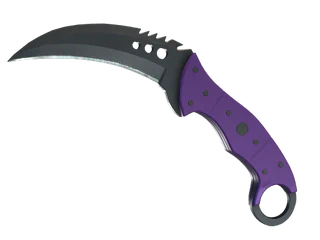
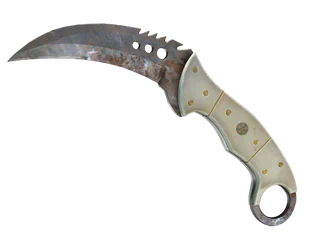
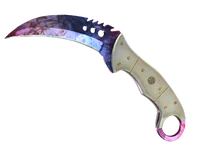
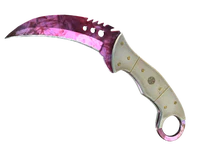
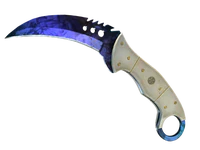
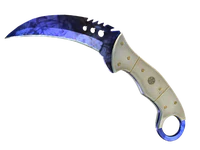
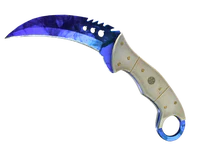
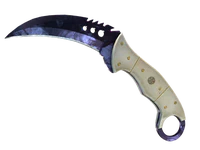
A mainstream covert knife that lives in a familiar spot for traders: demand is steady but the long term tone has been down, leaving clean examples as the only real movers. Float is capped and phases matter, so check phase and seed before you lean on a clean-finish thesis.
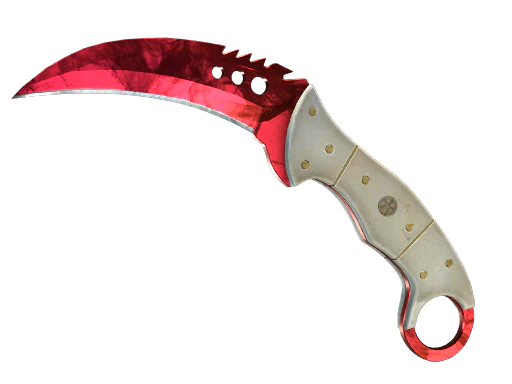
A mainstream covert knife that lives in a familiar spot for traders: demand is steady but the long term tone has been down, leaving clean examples as the only real movers. Float is capped and phases matter, so check phase and seed before you lean on a clean-finish thesis.
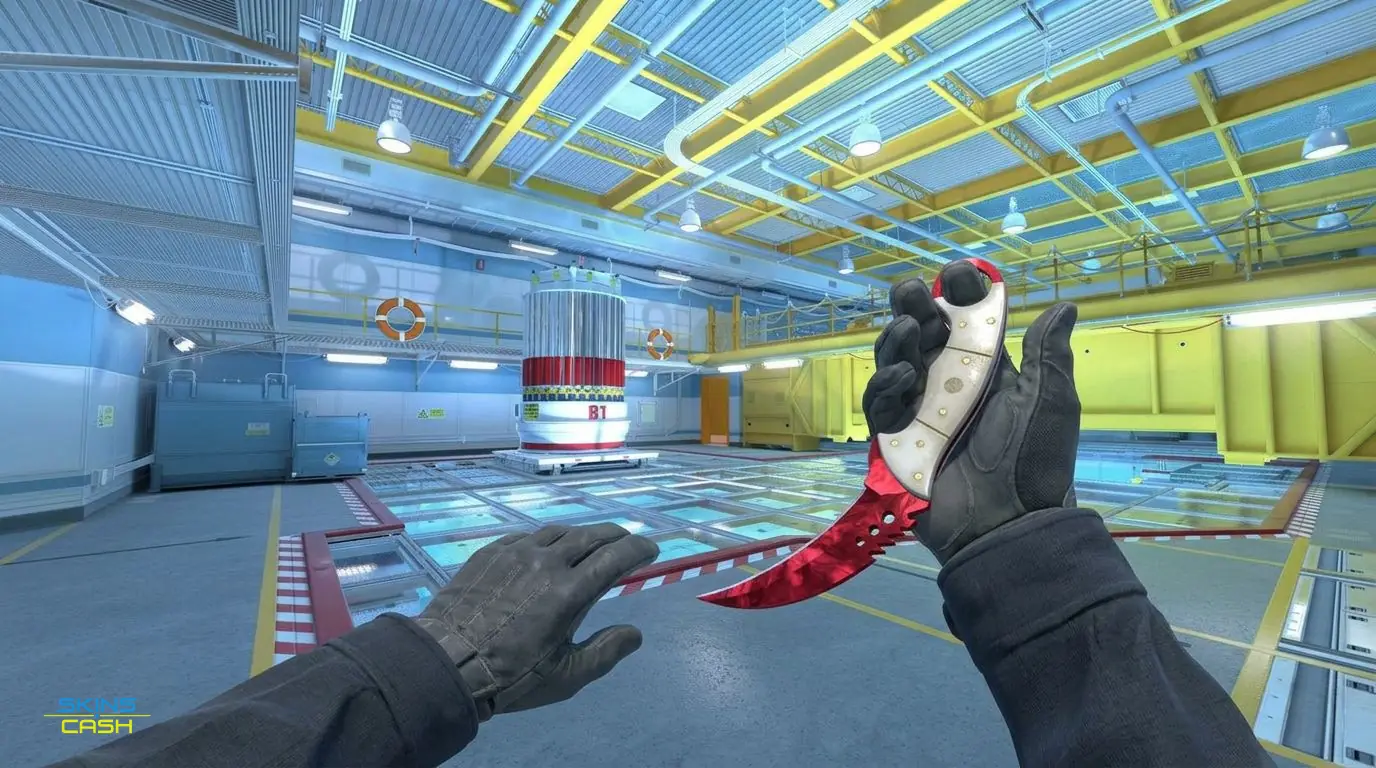

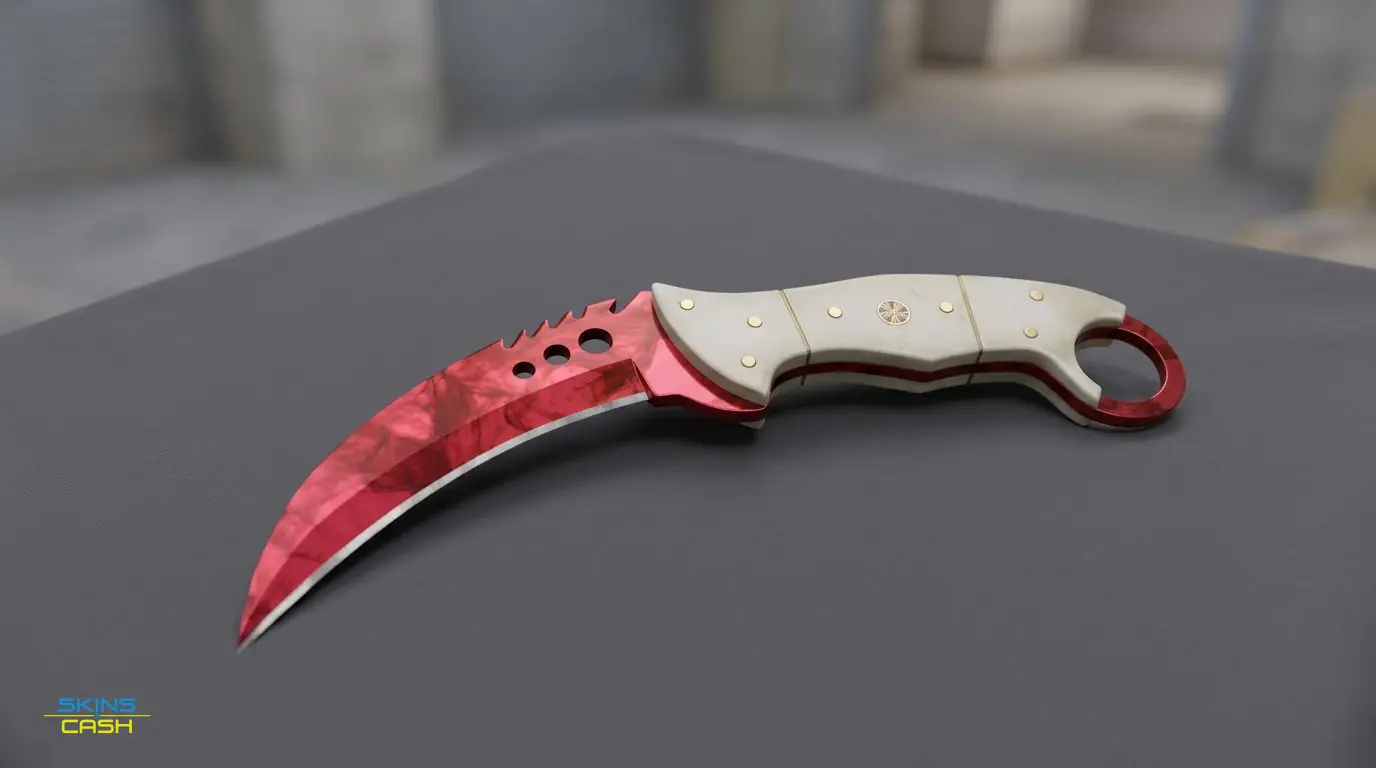
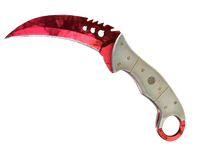
This Talon knife sits in the premium bracket for shoppers who want a compact, red-dominant blade without exotic StatTrak or souvenir variants to complicate matters. For sellers that means fewer impulse buyers and more deliberate bidders-listings sit, but serious collectors will pay for the right phase and polish.
The payout curve leans into a clean-end premium with a measurable drop as wear deepens; it is not a shallow, linear ladder. Because the float range is capped the top wears concentrate value while the lower end compresses into a tighter band than a full-range finish would show.
Expect a clear gap between sticker and net: listing prices reflect the clean-end premium and buyer hesitation, while actual cashout nets are pulled down by time-on-market and tighter demand. Sellers should price to the net they want, not the ask they see, and be ready to absorb a wider spread when the market is soft.
Mid-range to slightly worn copies give the most skin-for-money for buyers; the cleaner examples stop paying off once you hit the capped portion of the ladder. If you want to shift stock quickly, target that middle band rather than waiting for the perfect clean copy to trade.
Because the Doppler Ruby finish does not run the full float spectrum the so-called worst copies are cleaner than usual, which flattens the bottom of the ladder. That compression reduces cheap arbitrage at the low end and forces value toward phase and polish instead of raw wear alone.
Phases here are everything-some Doppler Ruby phases carry a clear premium beyond float, and seeds can further split those pockets. Inspect the phase closely and, when in doubt, favor the cleaner-looking red areas and tight anodized finish when quoting a higher ask.
There is only one market line for this blade: no StatTrak, no Souvenir. That simplicity removes cross-line noise and lets you read bids and asks without guessing which variant a buyer means.
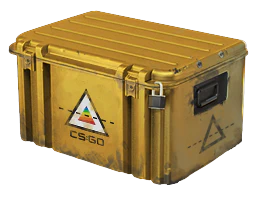
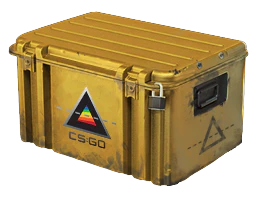
This knife is a Prisma Case drop, which keeps supply tied to a popular container rather than a niche crate. That origin gives a steady, visible trickle of copies into the market, which is important when supply-sensitive demand softens.
The palette is aggressively red with the Valve anodized multicolored finish giving flashes that pop under match lighting. It reads bold in-game; the red dominance makes it easy to spot at a distance and desirable for buyers layering looks around a red theme.
The all-time band for this knife is wide, reflecting stretched swings between peak collector interest and the current downtrend. Right now prices sit well below earlier high-water marks but above the extreme bottom, leaving room for outsized moves if demand briefly tightens.
Sellers often misprice by using sticker asks as a cashout target or by ignoring the capped float and phase effects. Avoid that by confirming the float is in the capped band, calling out the phase in your listing, and setting expectations to the net you need rather than the highest visible ask.
This Talon has been carried by named pros, and that association keeps a baseline of interest from fans and collectors. Pro usage doesn't create frenzy here, but it does steady demand and occasionally lifts a clean or rare phase into a short-term uptick.