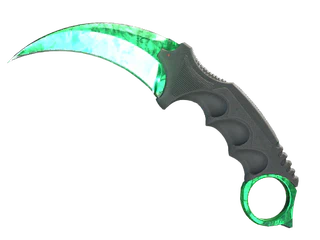
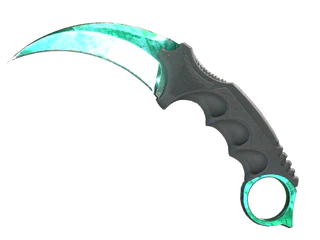
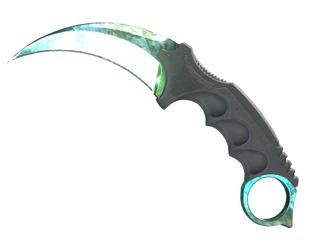
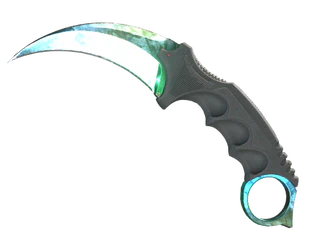
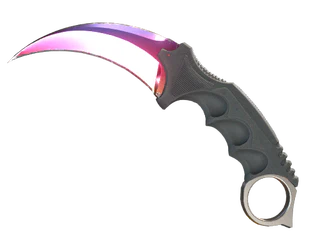
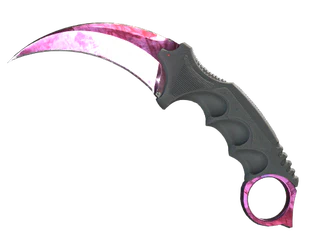
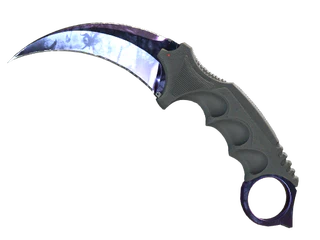
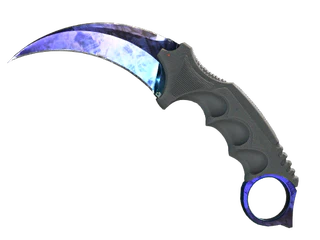
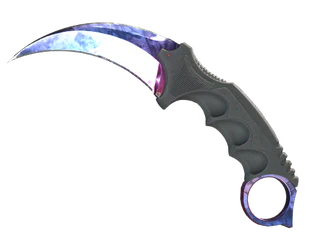
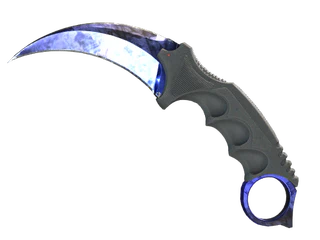
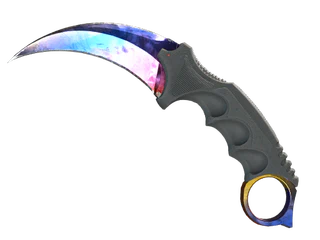
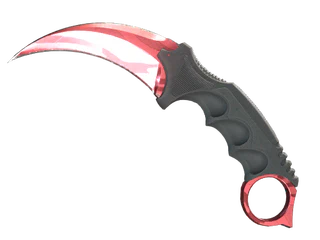
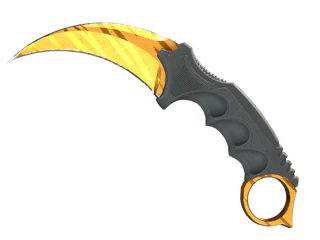
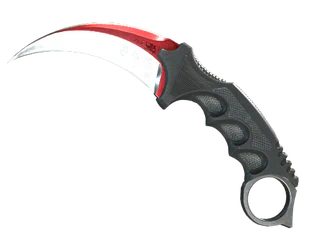
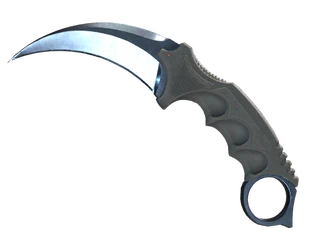
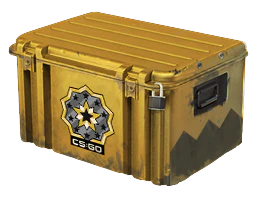
A premium karambit that trades like a collector piece rather than a churn item - tight supply and a high floor keep bids firm even when the market cools. Clean copies command real attention from buyers, while worn examples still clear a respectable minimum thanks to the covert rarity and the Chroma Case origin.
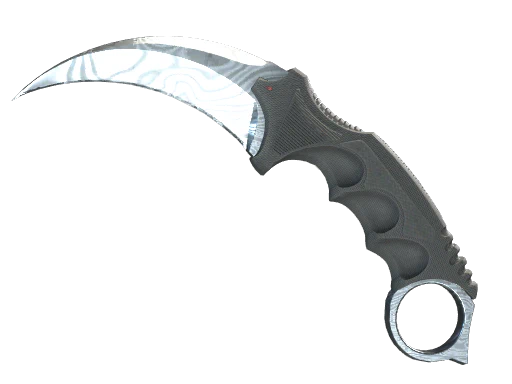
A premium karambit that trades like a collector piece rather than a churn item - tight supply and a high floor keep bids firm even when the market cools. Clean copies command real attention from buyers, while worn examples still clear a respectable minimum thanks to the covert rarity and the Chroma Case origin.
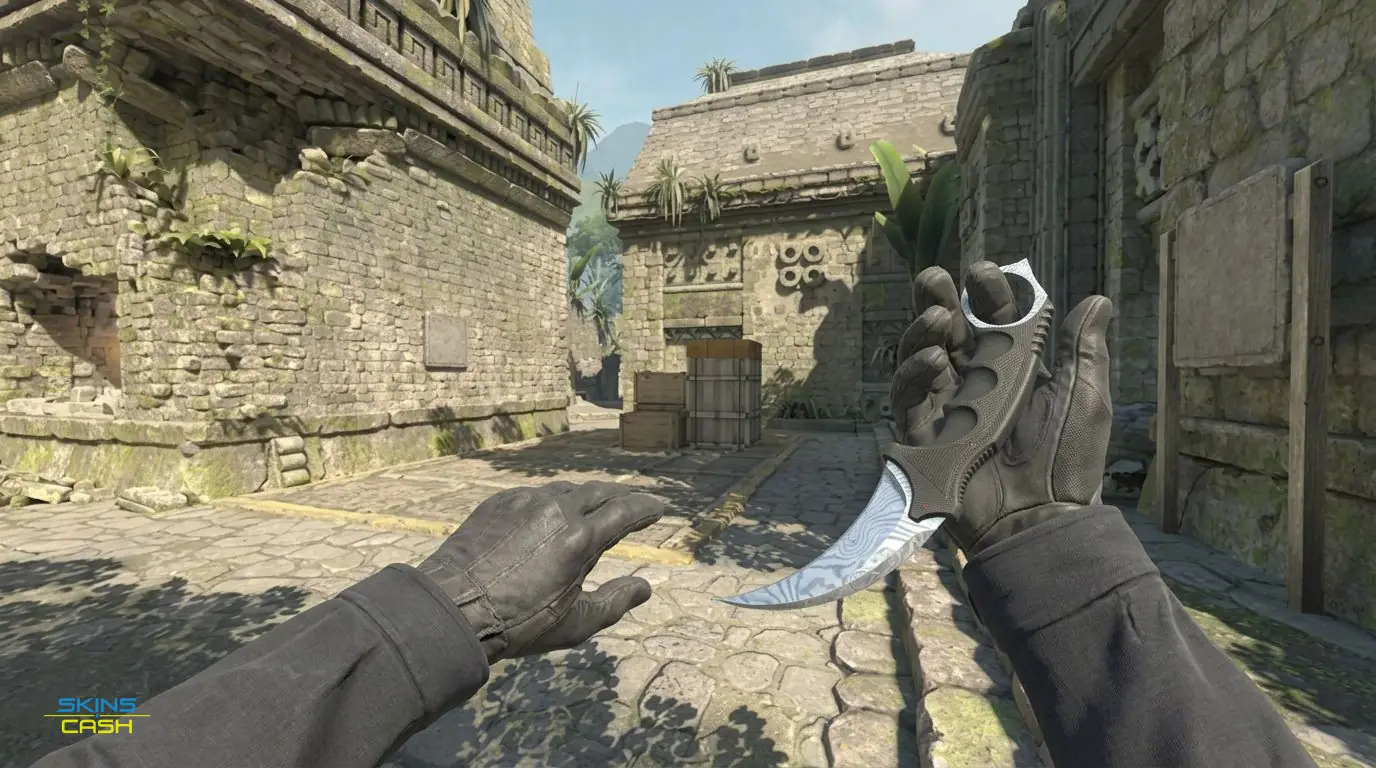

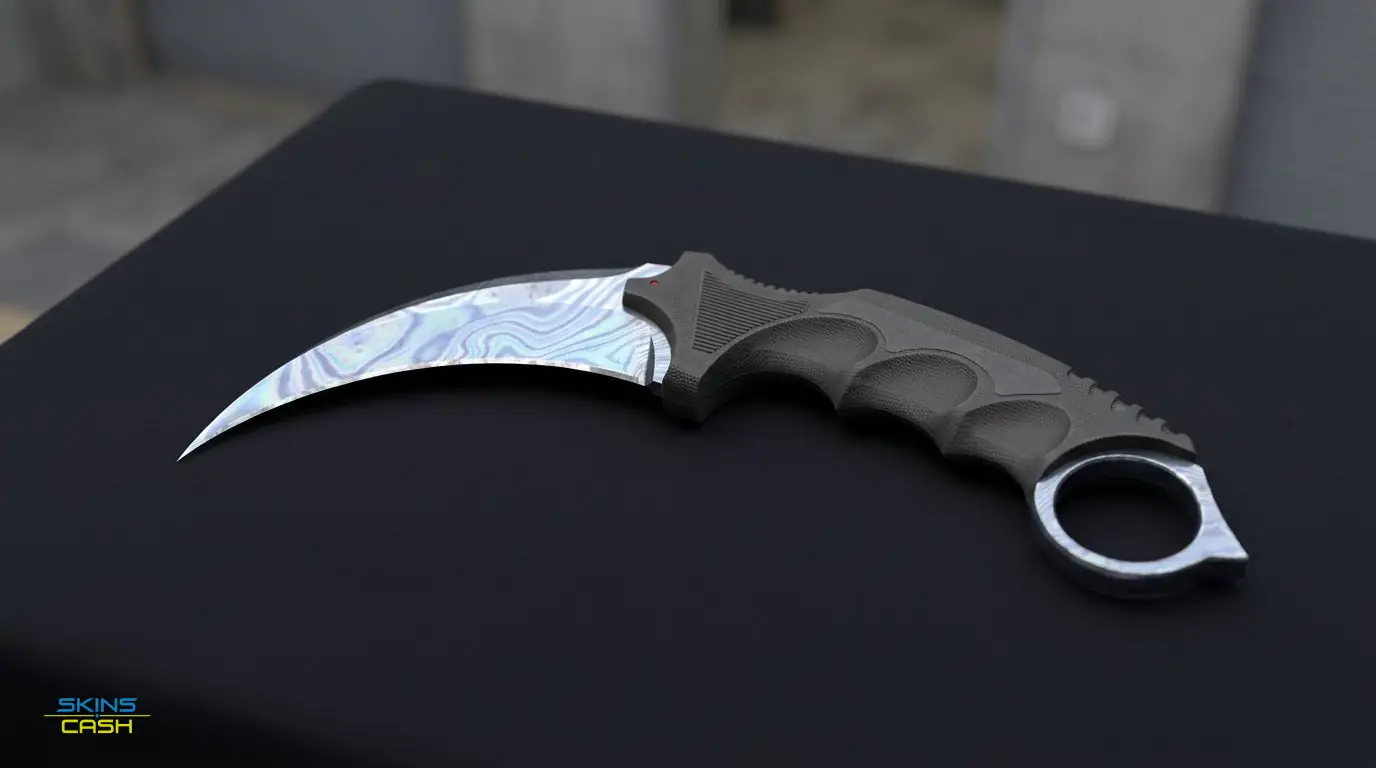
This sits in the premium bracket among karambits: not a grail but well above mid market attention. For a seller that means selective demand and fewer impulse buyers - listings can linger until the right collector or trader turns up, so patience often nets better execution than quick flips.
The ladder is capped and shows a concentrated payout near the clean end with a steep fall toward the higher wears. The capped float profile tightens where the top-tier looks live, so the bulk of value is clustered rather than spread evenly through the ladder.
If you want skin-for-money, the slightly worn-to-clean band delivers the best tradeoff; once you pass the very clean zone the incremental premium dries up. Sellers should watch for that inflection where paying for extra cleanliness stops being efficient for buyers.
Listings often sit above what a seller actually nets because of platform fees, taker discipline, and the premium bidders demand for show-ready copies. Expect a practical gap between stickered asks and cashout offers; the sticker price is often aspirational in this tier.
Damascus Steel patina reads sharply at low float and softens noticeably as wear rises, so buyers do pay for visible crispness in the pattern and edge work. The finish reacts to float in a way buyers can see in screenshots, which makes clean floats meaningfully more sought after.
Covert status props up the lower ladder even when demand cools, keeping worn pieces from collapsing to dust. That floor behavior makes clearing a cashout simpler than with lower rarity blades.
StatTrak exists and behaves differently from regular copies - the ST side has its own curve and can invert relative to standard pricing, so ST sellers should price with that divergence in mind. Liquidity for StatTrak is narrower; when the ST market moves it does so on fewer hands.
The white-leaning patina and Damascus pattern read clean under most map lighting, and Valve's finish work keeps the blade looking premium from a distance. That restrained palette helps it slot into many inventory decks without clashing.
It comes out of the Chroma Case, which keeps population limited compared with generic drops and concentrates supply into a predictable container. That origin is part of why strong floors exist for worn copies and why clean ones hold a higher premium.
The yearly arc has been a bleed down from an earlier peak with a softer uptick more recently, so long-term value has been re-rated downward but shows signs of short-term recovery. Sellers should treat the long slide as context while weighing recent strength.
With a massive historical range and recent soft upward movement, price action is jumpy but with clear boundaries set by the high floor and capped profile. That combination rewards timing: cashing out on a short-lived uptick usually beats waiting through a volatile pullback.
Buyers looking to flip should avoid paying top-tier premiums for tiny float improvements; entry discipline means preferring the clean-to-slightly-clean band where resale appetite lives. Watch the ask ladder and pick the point where the spread to cashout looks defensible against a soft market turn.