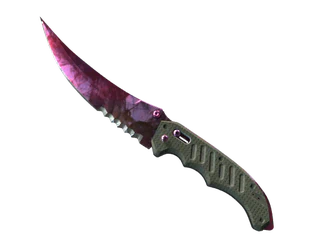
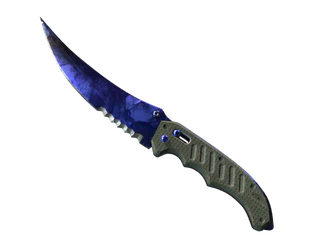
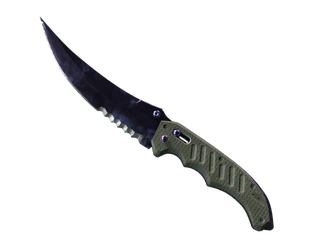
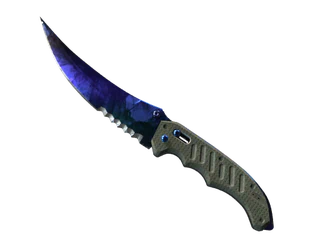
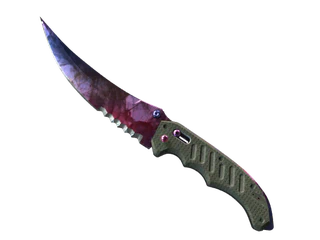
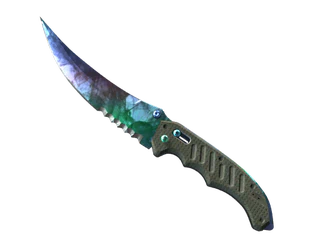
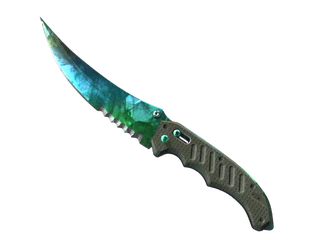
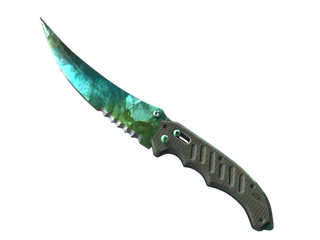
Mid-tier demand and a capped float profile make this Flip Knife a practical cashout piece rather than a long-term moonshot. Buyers are most active at the cleaner end of the ladder, while worn copies trade tightly together and clear more easily than you'd expect for a covert knife.
Mid-tier demand and a capped float profile make this Flip Knife a practical cashout piece rather than a long-term moonshot. Buyers are most active at the cleaner end of the ladder, while worn copies trade tightly together and clear more easily than you'd expect for a covert knife.
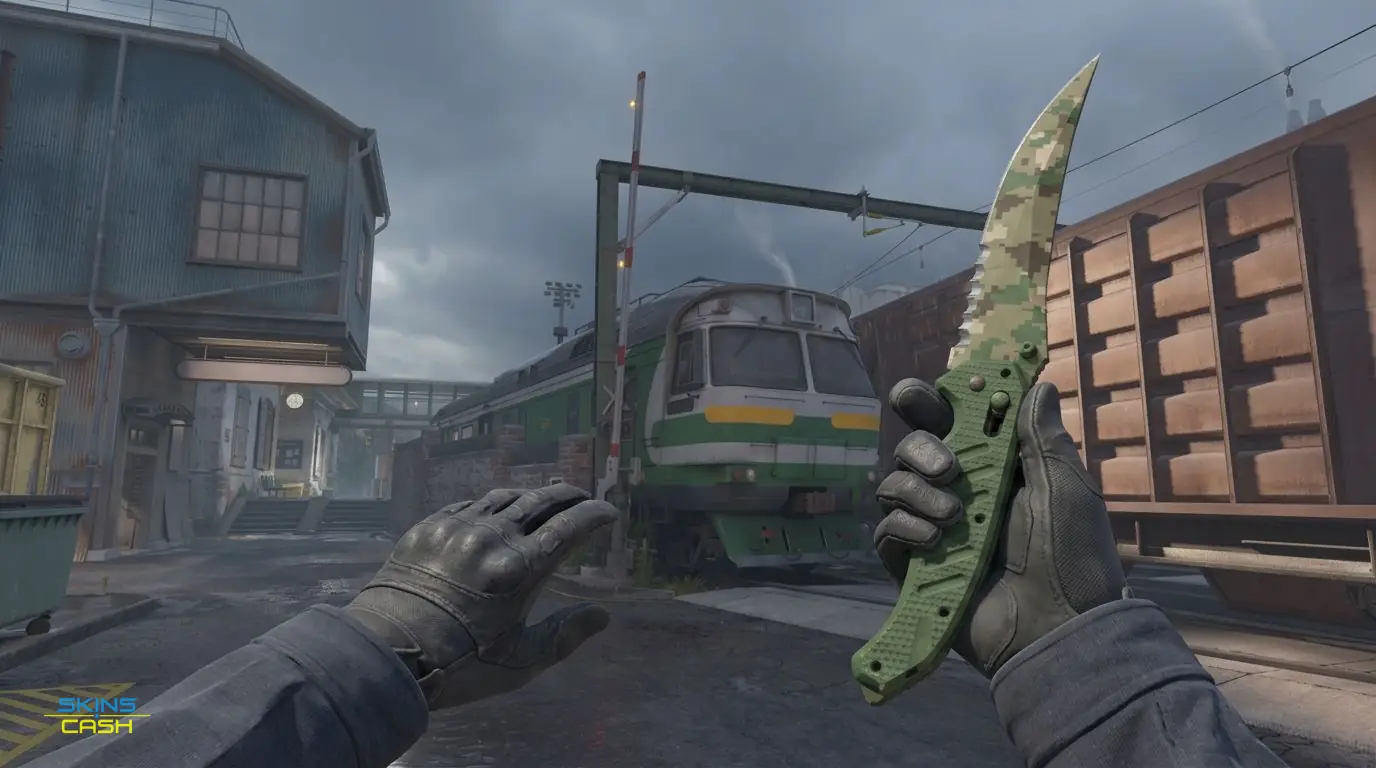
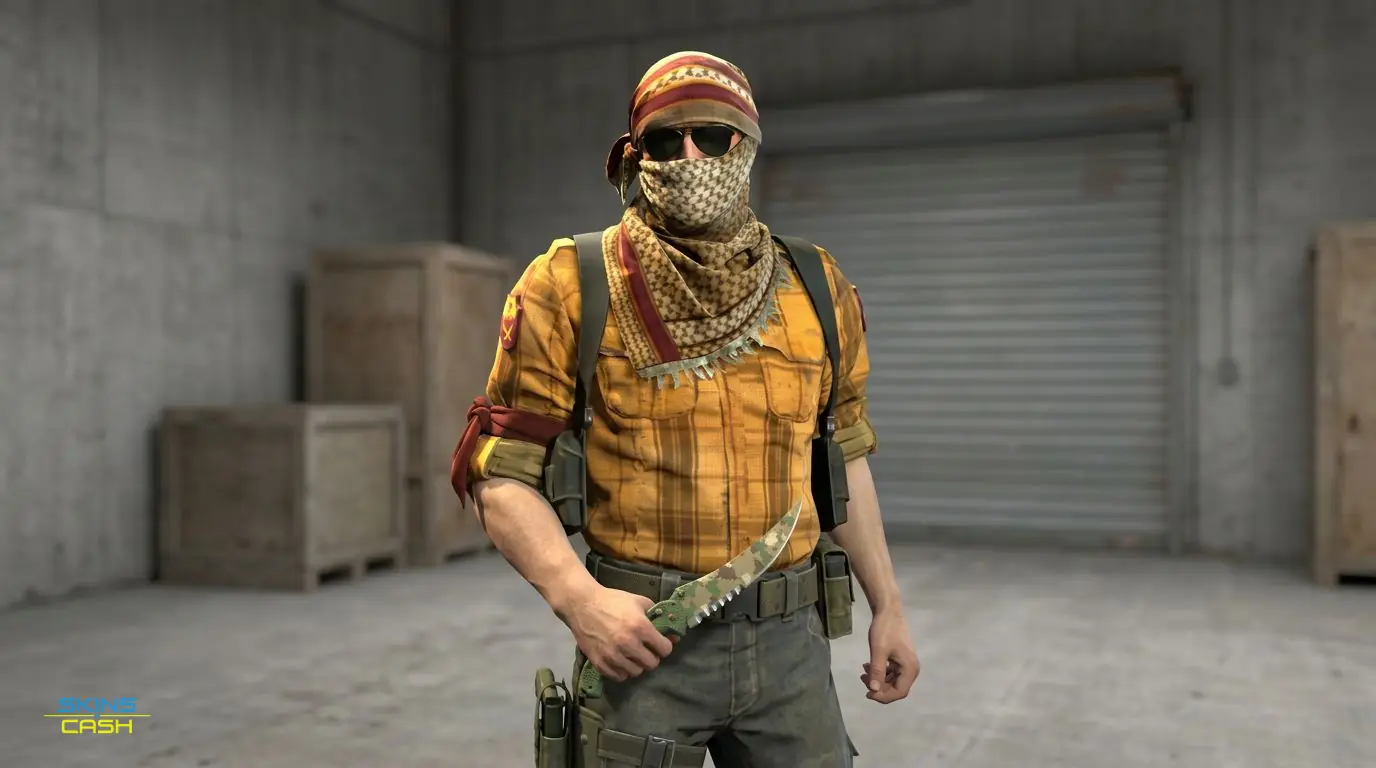
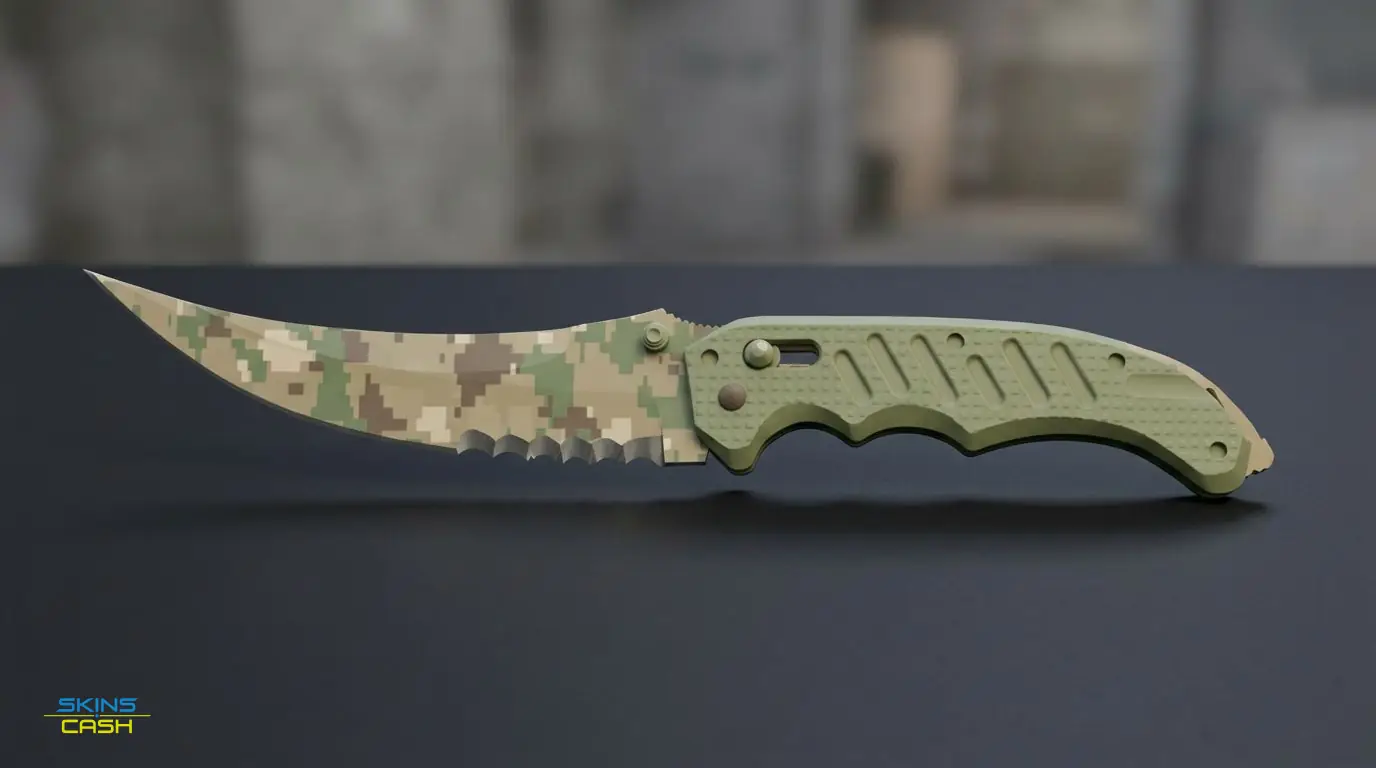
This lives squarely in the mid bracket among knives - not grail money, not budget fodder. That positioning means steady interest without frantic churn: it sells when listed sensibly, and you get a reliable bid if you price toward the middle of the asks.
The payout curve is frontloaded toward the clean end but capped by the float profile, so the top wears command an obvious edge while the rest slide down a gentler slope. Expect a quick step off the peak rather than a gradual equal spread across every float.
Worn examples sit in a narrow band, so a dirtier Forest DDPAT often occupies nearly the same payout as slightly cleaner worn copies. That makes worn copies easy to clear: there is little premium to squeeze out by micro-optimizing float down there.
The gap between sticker and cashout is wider at the clean end where buyers haggle for the best face, and flatter down the ladder where volume absorbs listings faster. Sellers should price against the live buy block, not the top ask, to avoid painful wait times and sticky listings.
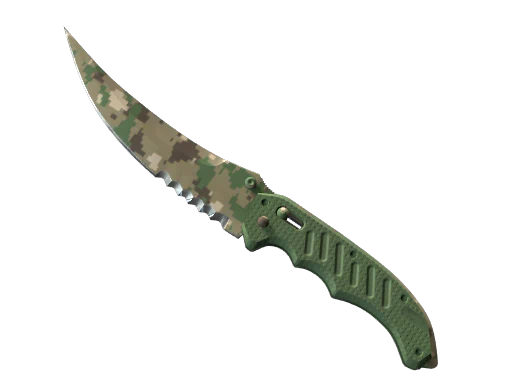
Forest DDPAT's hydrographic finish shows progressive dulling with float, but the pattern itself is simple and forgiving; visible degradation earns buyers' attention mainly at the cleanest tiers. In short: wear matters most for the pristine faces, then fades into insignificance.
With StatTrak active, you can see a counterintuitive inversion where a higher-float copy beats a lower-float one because buyer preference for StatTrak outweighs marginal cleanliness. Watch active StatTrak asks closely: inventory with the counter often lists at stronger levels than equivalent non-StatTrak floats.
There are no pattern-driven surprises here; the hydrographic Forest DDPAT does not hide scarce seed variants, so price movement is purely float and variant driven. That simplifies pricing: you trade wear and StatTrak status, not a random index hunt.
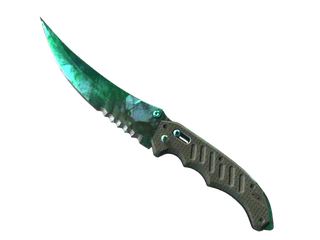
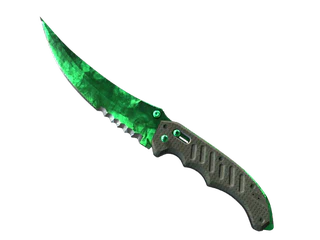
The dominant green reads clean and tactical in game, the hydrographic finish keeps a matte, workmanlike surface rather than high contrast. That low-key palette is why this knife plays well in rotations - it pairs without shouting.
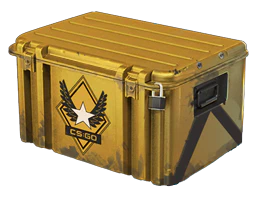
It comes from the CS:GO Weapon Case, a common source that keeps refresh supply steady but not overwhelming. The case origin supports regular turnover, which underpins the mid-tier liquidity profile.
The last long-term move has been a steady bleed rather than a rerate up, while shorter-term activity has flattened out. In practice that means less speculative upside and more realistic expectations for selling into demand.
Pick the ask layer where StatTrak versus non-StatTrak value makes sense for your play: avoid paying top-of-book for a suboptimal float and instead target the middle asks where resale slippage is smallest. Patience wins; the live buy block is the true clearing price.
Players respect the designer pedigree and the covert knife cachet, and the community treats this as a solid, usable piece rather than a collector grail. That steady sentiment keeps a baseline of demand even when broader trends are quiet.