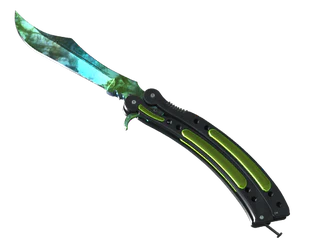
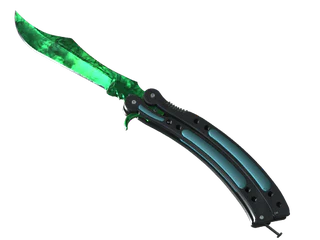
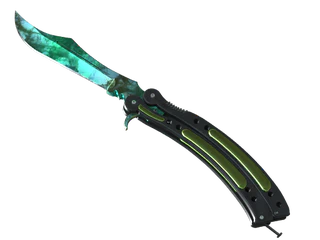
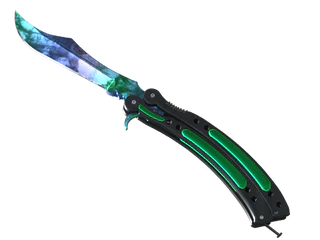
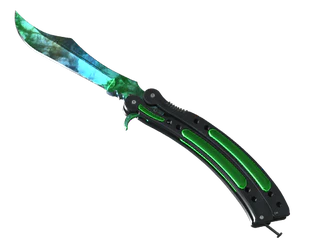
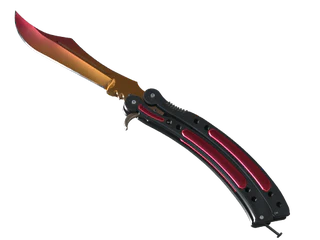
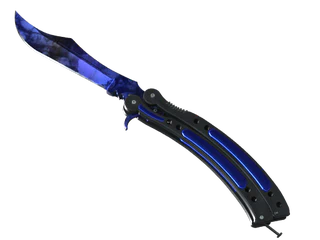
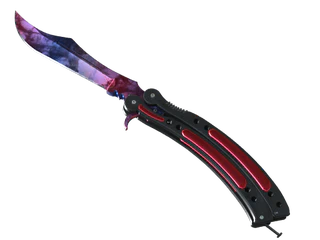
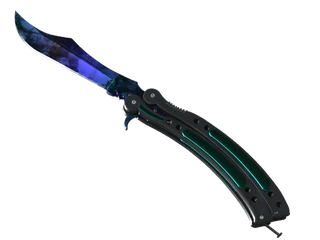
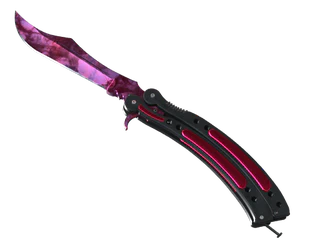
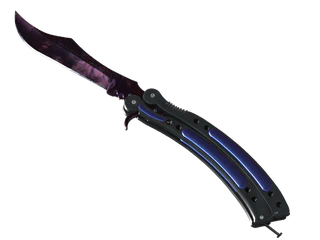
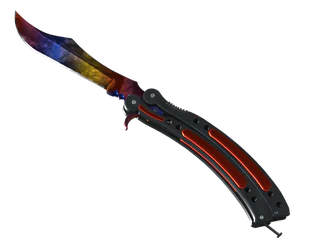
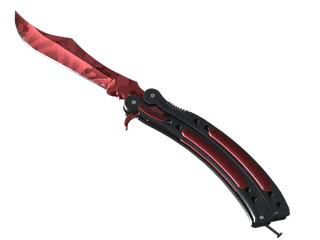
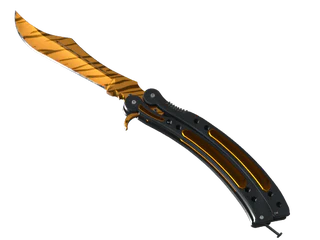
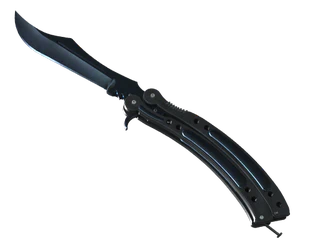
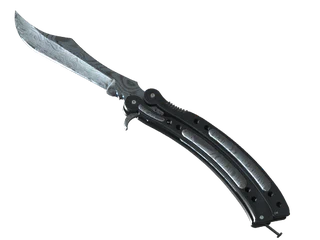
Premium-tier butterfly knife that lives at the top of its bracket and trades to collectors rather than mass traders. High floor and a capped float profile make the clean copies the liquidity magnets; sellers should watch the spread and the StatTrak line before pulling the trigger.
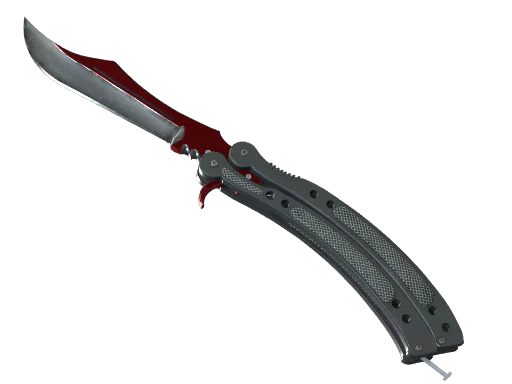
Premium-tier butterfly knife that lives at the top of its bracket and trades to collectors rather than mass traders. High floor and a capped float profile make the clean copies the liquidity magnets; sellers should watch the spread and the StatTrak line before pulling the trigger.
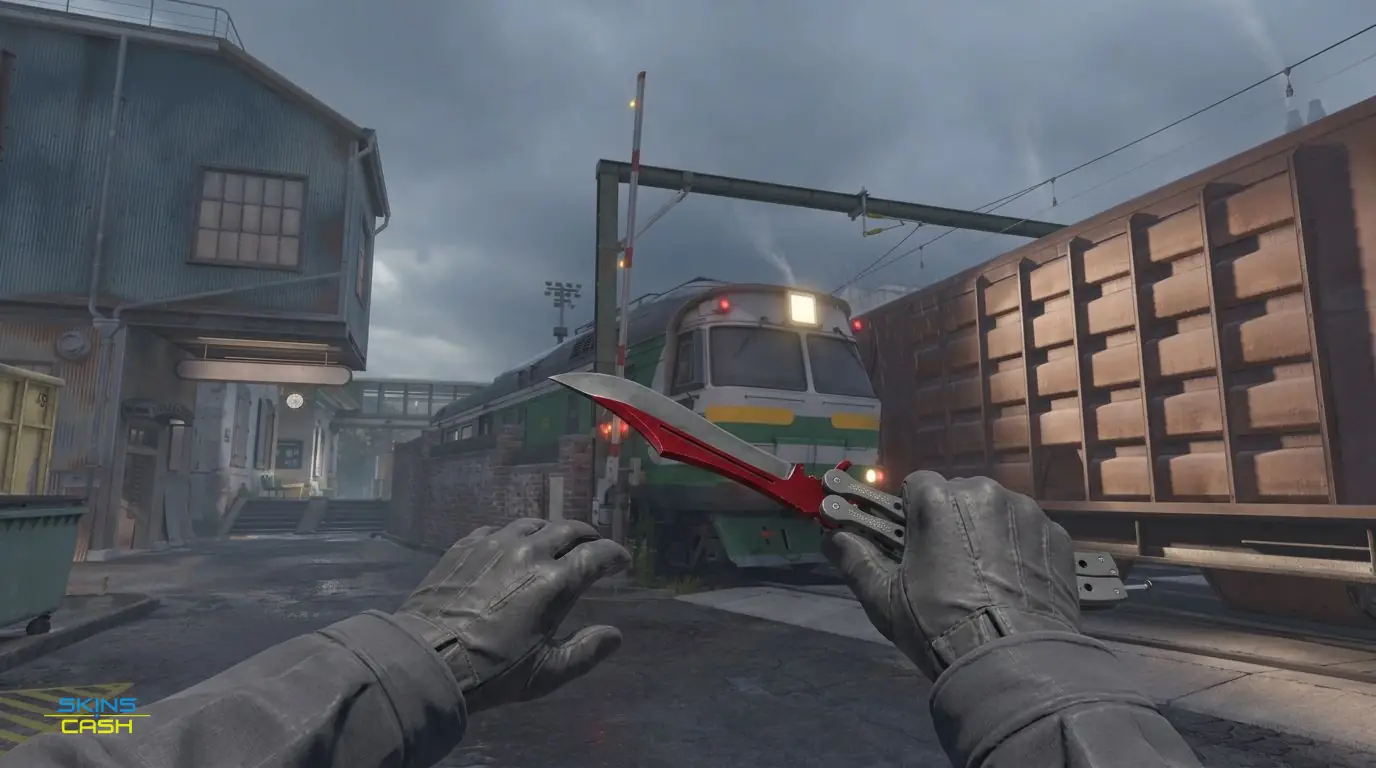
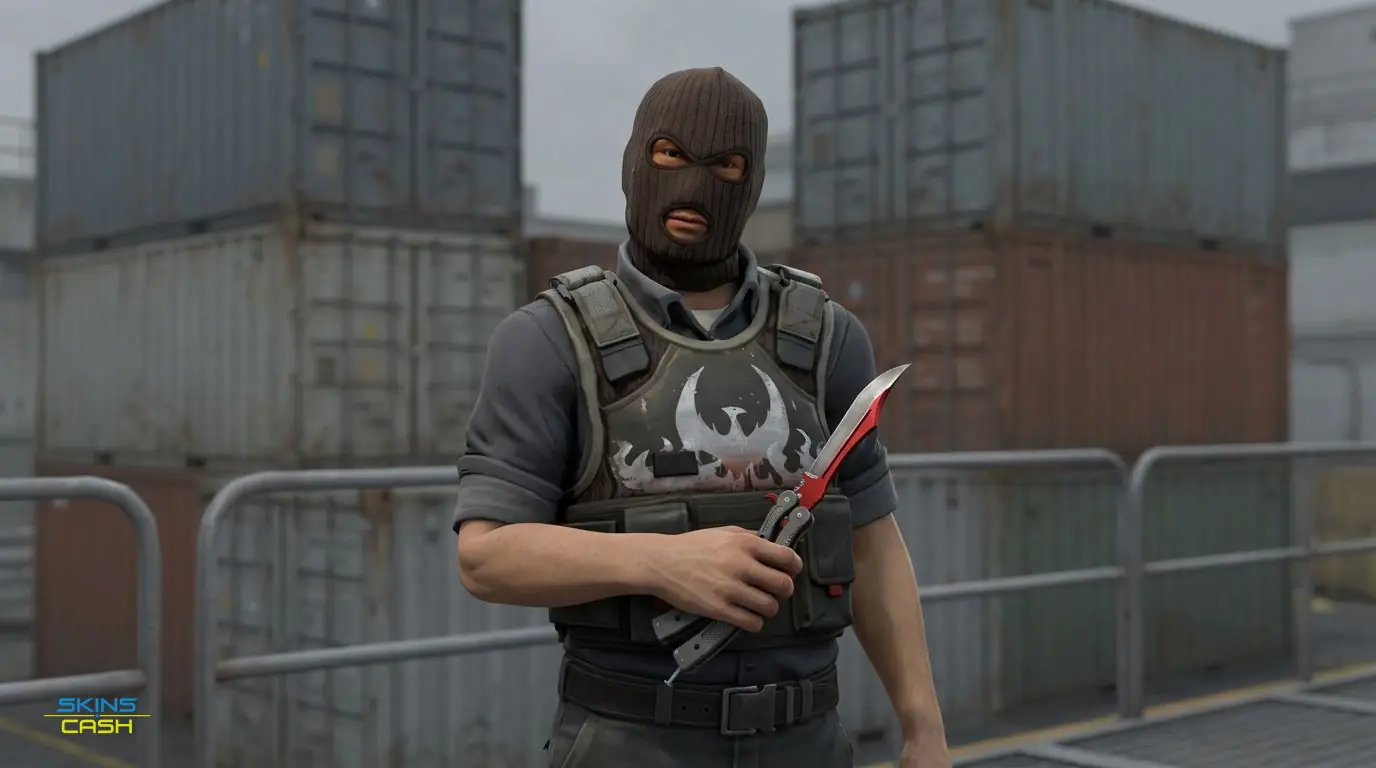
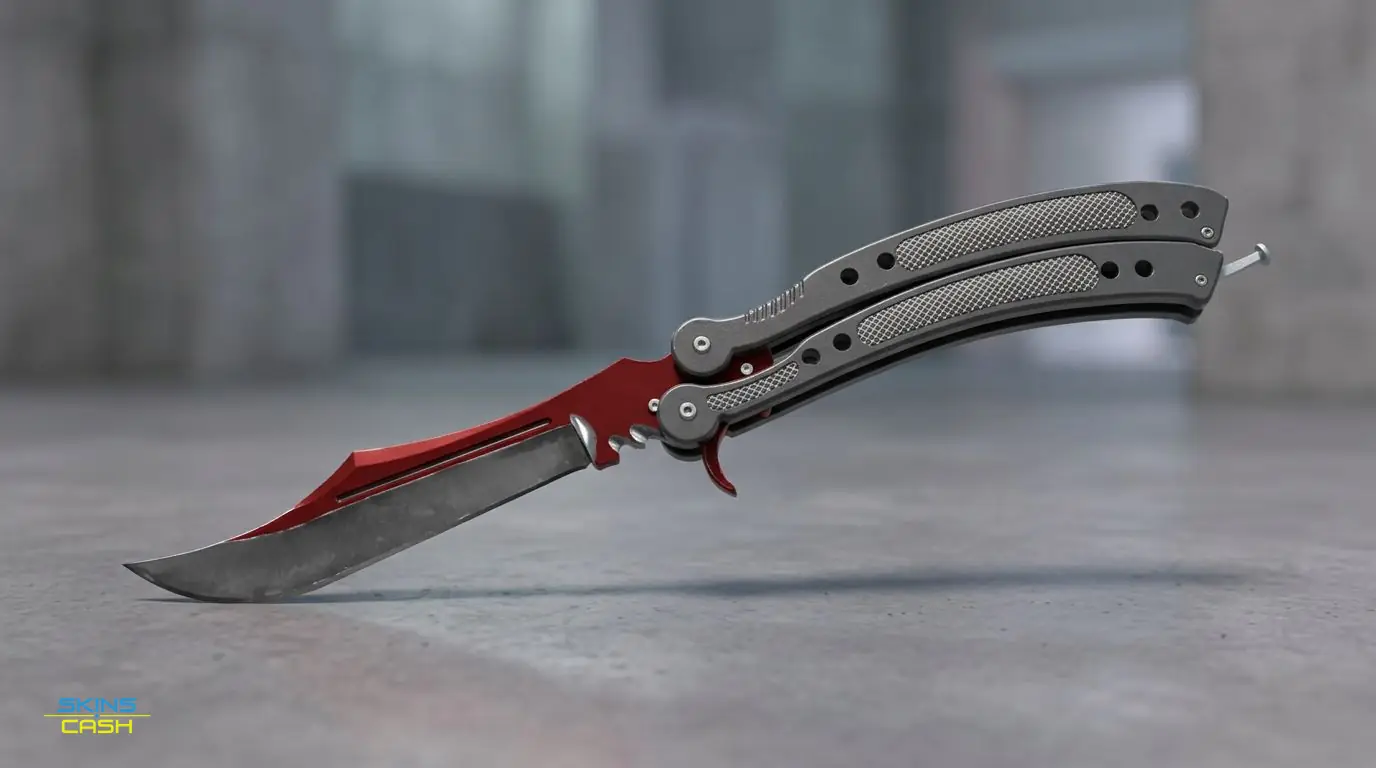
This is a premium grail piece inside the covert knife segment and it trades accordingly - demand comes from buyers chasing a specific look and rarity rather than quick flips. For a seller that means fewer, more deliberate offers: listings sit longer but attract deeper buyers when the market lines up.
The payout curve is a classic capped profile with a clear premium at the clean end and a relatively steady taper after that; it is not a gentle linear slide. Expect a concentrated top band and then a broader mid band where most activity happens.
Ask prices live well above the cashout a seller nets because premium listings target collectors and include marketplace friction; the gap widens at the top of the ladder. When you list, factor that buyers will stomach a sticker that retail platforms use, while your immediate cashout reflects the real, quicker liquidity.
The most skin for money sits in the mid-to-low wear band where you still get the pattern and color but avoid the clean-end premium tax. Clean copies become diminishing returns rapidly; after a point the extra cleanliness stops moving the payout enough to justify holding.
Because the finish is capped the so-called worst copies are cleaner than standard knives, and that flattens the bottom tail of the ladder. The result is fewer junk-out listings and a tighter lower band compared with uncapped blades.
There is no pattern index effect to chase here; price reacts to float and StatTrak status only. That removes seed noise and makes pricing a straight float play, which simplifies flip decisions.
StatTrak exists and carries its own separate demand curve that rides above the non-StatTrak line but follows the same capped-wear logic. Sellers will see StatTrak move in step with clean copies, just with a higher hurdle to clear when pricing into offers.
It drops from the Operation Riptide Case, so supply is tied to that case's circulation and any changes to its drop volume. That origin keeps supply limited relative to standard cases and supports the top-end floor.
Red and gray plus a gunsmith finish give the blade a brutal, industrial read that plays well in many hand positions; the Valve designer stamp keeps it familiar to collectors. The reds pop against gray backing, so the knife reads cleanly at a glance and photographs predictably for listings.
Over the year the line has bled down from its highs and only recently picked up soft upward motion in the last month. The longer arc suggests a re-rating away from earlier peaks, but short-term demand shows signs of recovery.
Wide historical range plus the down long-term trend makes this a jumpy candidate around chops and market moves, yet the high floor tempers the worst swings. That combination rewards timing: patience through sudden dips tends to win more than panic exits.
Control the spread by pegging to the live cashout band and refusing the top-asking listings unless you want to wait for a collector; push for the mid ladder when you need speed. Leave room for the StatTrak premium, but do not undercut the capped-bottom realities when setting a take price.