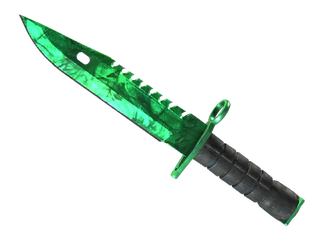
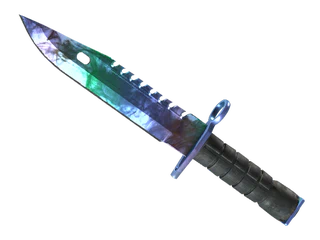
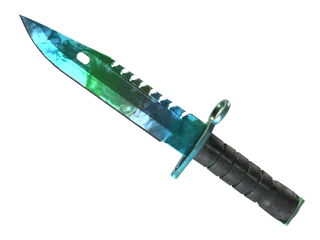
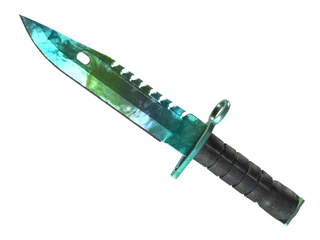
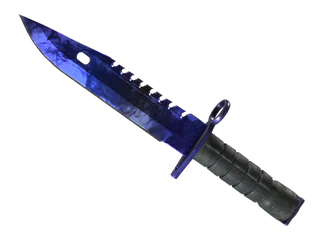
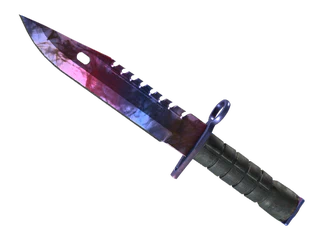
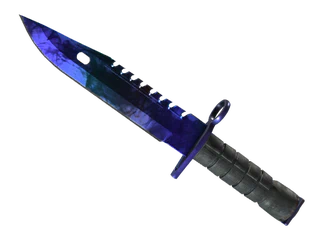
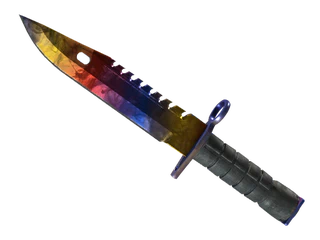
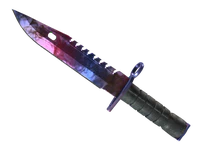
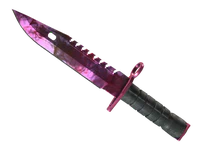
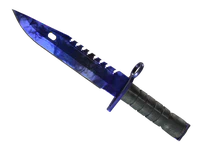
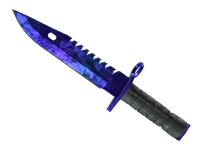
Top-tier blade but sitting as a premium pocket play rather than a grail - clean copies command attention while the bulk sits lower. The market is mainstream but softened recently, so sellers should pick clean floats and phases carefully before they cash out.
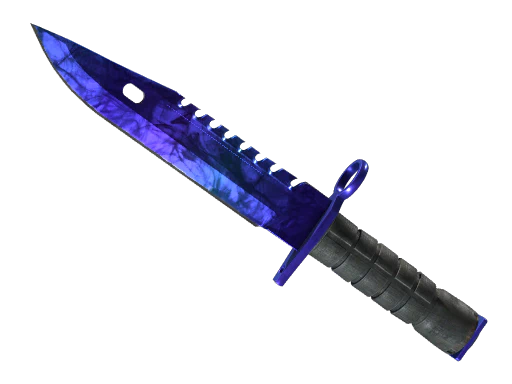
Top-tier blade but sitting as a premium pocket play rather than a grail - clean copies command attention while the bulk sits lower. The market is mainstream but softened recently, so sellers should pick clean floats and phases carefully before they cash out.
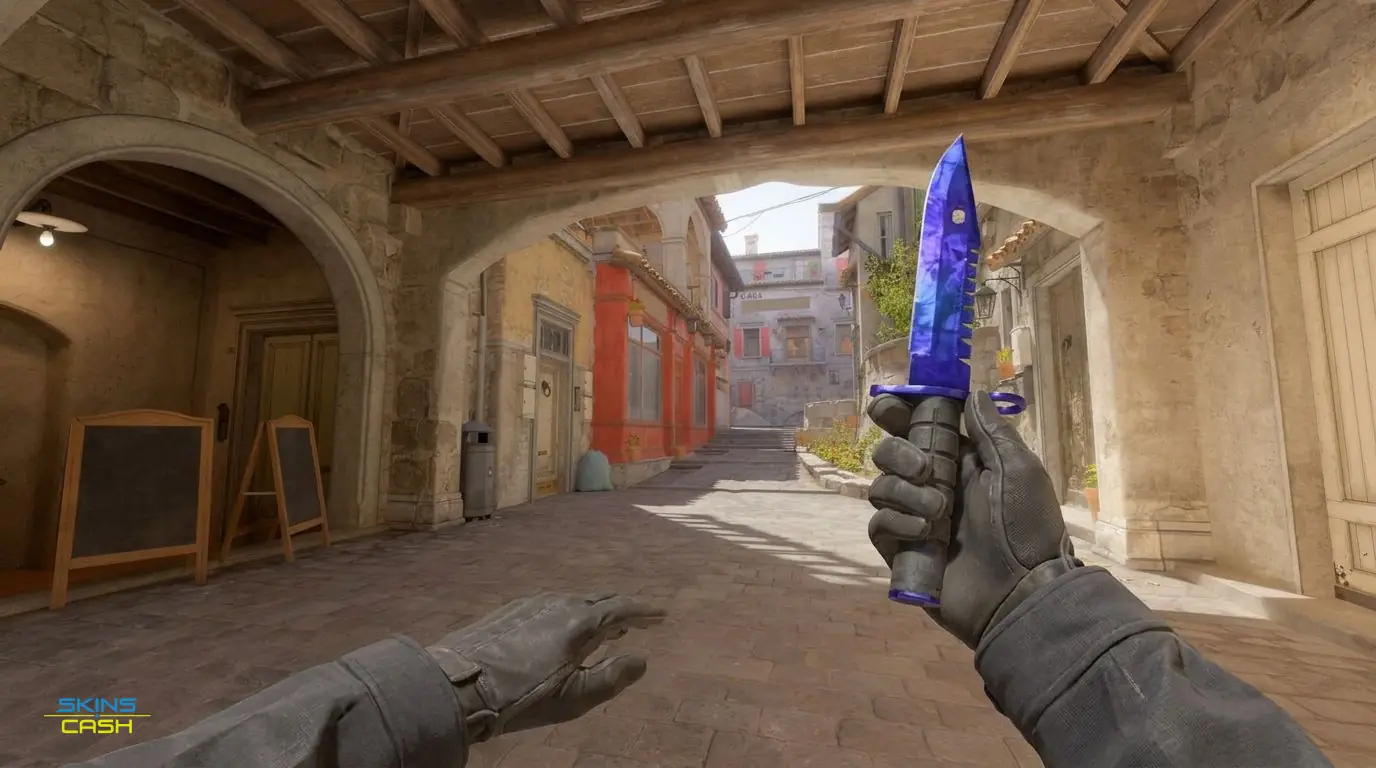

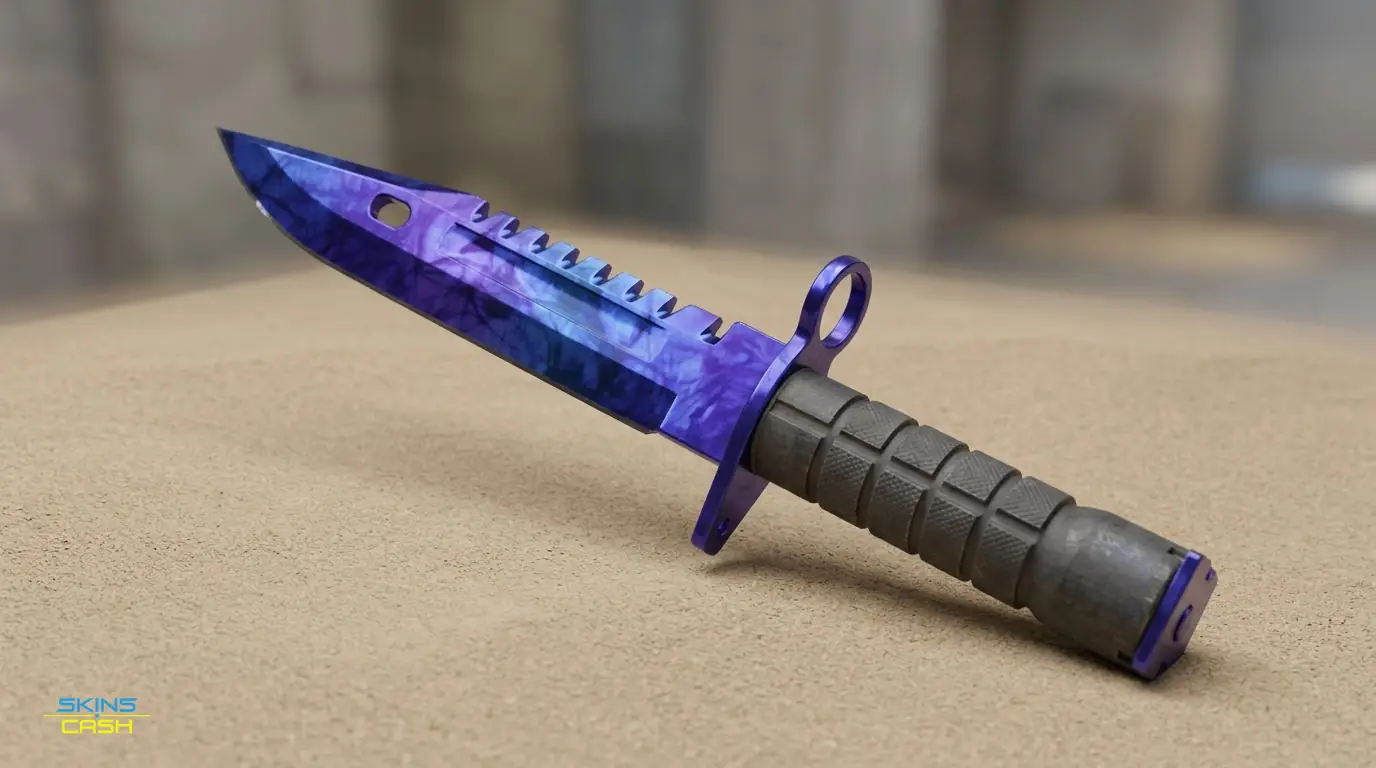
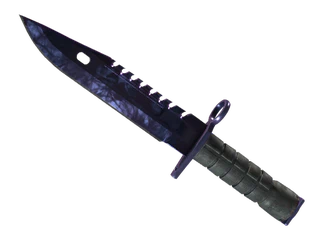
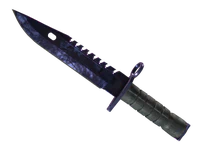
This is a premium bayonet profile within the covert bracket: not basement fare, not unreachable grail money either. Demand is concentrated among collectors and players who want the blue sapphire look on a heavy knife, so liquidity is firm for the right copy and thin for everything else.
The payout curve tilts heavily toward the clean end with a capped float profile that accentuates the top rung; values fall off noticeably across the ladder rather than sliding evenly. Expect a steep distinction between the visually pristine sapphires and mid-wear copies.
Listings will show a sticker that buyers see; what you actually net is lower after the platform spread and market friction, and that gap widens on lower-demand copies. For sellers that means the listed top asks rarely convert at that figure unless the piece is the right phase and float.
Mid-wear copies often give the most skin-for-money - they show the Doppler flash without commanding the clean premium. Once you cross into the top visual rung, payouts climb quickly, so the marginal benefit of chasing ever cleaner floats thins out past that point.
Because the finish is capped, the worst copies still present cleaner than a full-range knife; the bottom of the ladder therefore behaves more like a solid mid than a true beaten example. That compression reduces bargain fodder and pushes collectors toward the scarce top-tier copies.
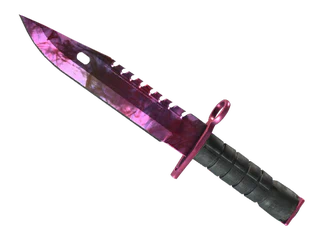
Phases and seed lines matter here: certain sapphire phases and desirable seeds pull a clear premium above float alone. Always check the phase marker and seed details - two sapphires with similar floats can sit in different asking brackets because of pattern quirks.
There is no StatTrak and no Souvenir to split demand, so the market is a single, clean line to read. That simplicity helps when pricing; you're not juggling parallel markets, just how much buyers pay for float and phase.
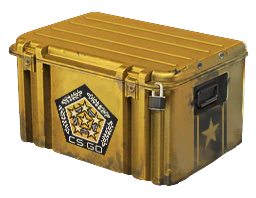
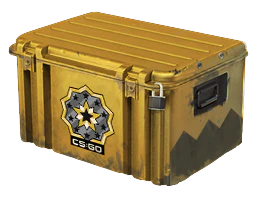
This blade comes from the Chroma Case, which frames supply and visibility. Case origin means fresh drops are limited to case circulation dynamics rather than event or souvenir churn.
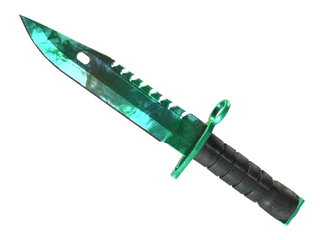
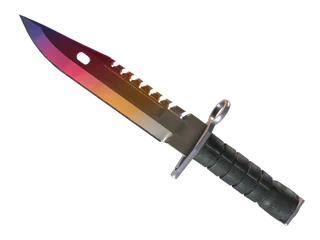
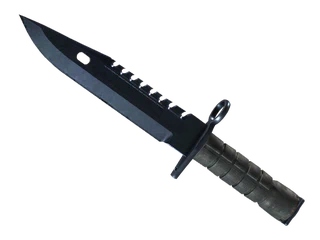
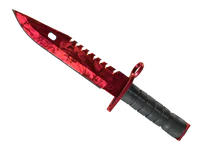
The finish is anodized multicolored with a dominant blue sapphire tone that reads cool and saturated in-game; the Valve designer stamp keeps the aesthetic familiar. It plays well in darker maps where the blue pops, which keeps it desirable among mains who want a standout knife without loud contrast.
The historical band for this bayonet is wide, with long stretches of quiet and sharp pushes on the clean end. Recent action sits toward the lower side of that band as the market has cooled.
Traders often misprice by ignoring the capped float and treating mid-wear as junk, or by listing at the buyer-side ask instead of the cashout level. Check phase, float cap, and the live spread before you post; that prevents the usual overpricing and stale listings.
Named pros like fer, boltz, and n0thing have been associated with this knife, which keeps it on the radar for viewers and collectors. That pedigree lifts demand for standout copies even while the broader market softens.