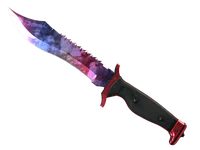
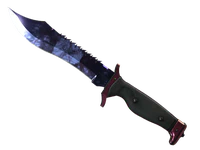
Premium-tier blade with a high floor and a tight top profile; demand sits with buyers who chase color and finish rather than bargain hunters. The float range is capped and the market has been drifting down over the year, so time and condition matter more here than for generic knives.
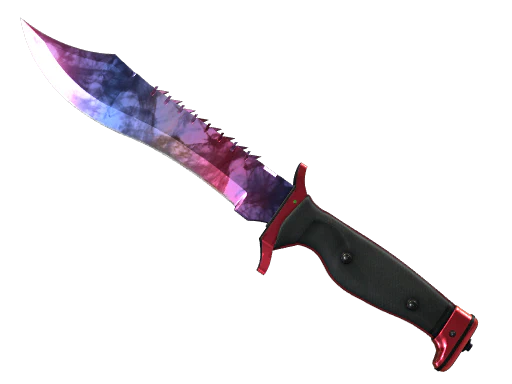
Premium-tier blade with a high floor and a tight top profile; demand sits with buyers who chase color and finish rather than bargain hunters. The float range is capped and the market has been drifting down over the year, so time and condition matter more here than for generic knives.
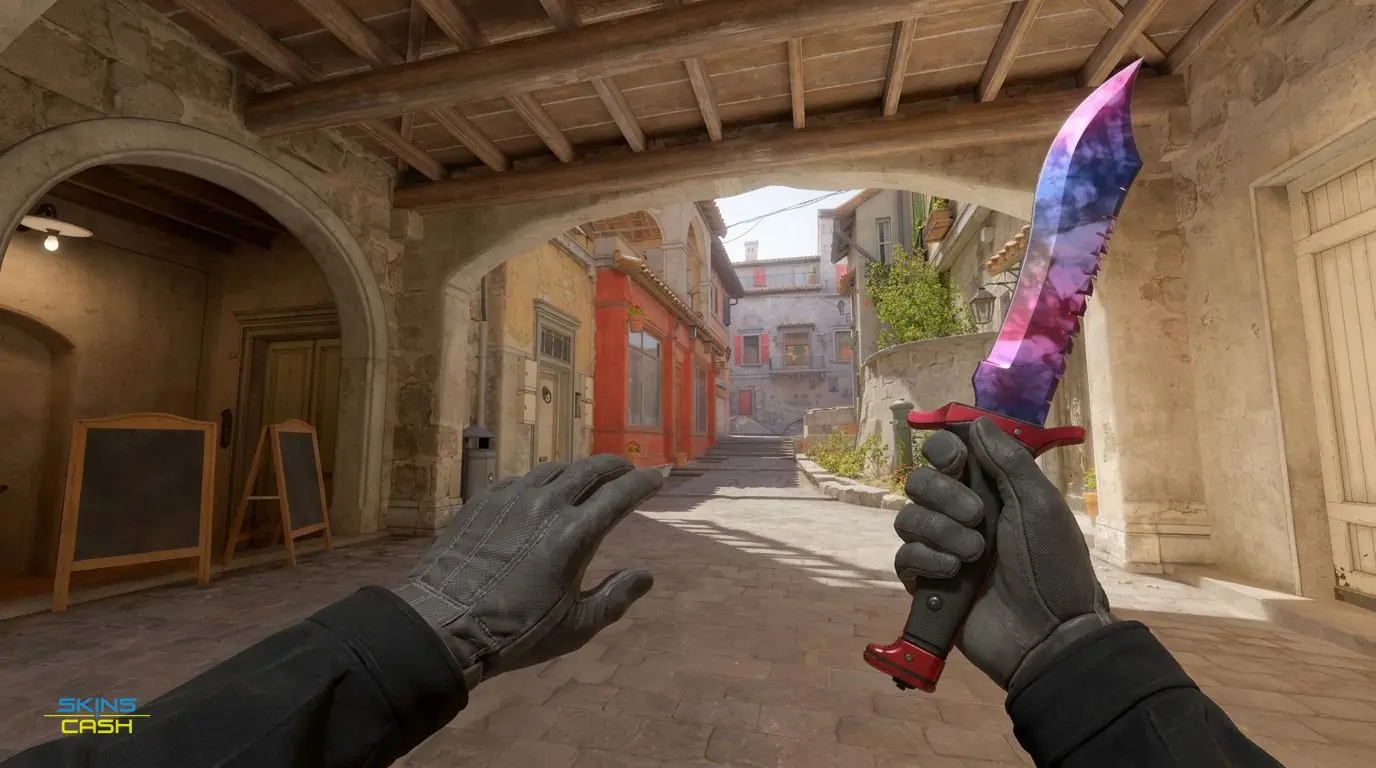


This is a premium, high-value bowie that behaves like a collector piece rather than a utility flip. Sellers see fewer casual bids and more deliberate buyers; that narrows activity but supports a firmer floor when a clean-looking copy appears. Expect selective interest from players who want the anodized multicolored look, not volume trade.
The ladder is compressed because of the capped float profile, with a clear step from the best-condition copies down into a broader mid band. Pricing is not a smooth slope; it drops in visible tiers rather than a gentle glide, so small float differences can move an item across a different pricing tier. Watch the jump points when you price listings.
Ask prices sit above what a seller will actually take because buyers build in friction and waiting risk, especially on premium blades. Realized payout often falls short of the sticker by a noticeable margin; fees, market lag, and the handful of active buyers create that gap. Expect to factor in negotiability when you list.
The most skin-for-money usually lives in the mid-tier of the ladder where the anodized purple-blue palette still reads strong but the premium cliffs haven't kicked in. Very worn copies stop rewarding the cleaner look well before they reach the bottom of the capped range, so mid-condition copies often deliver the best visual bang per dollar. Pick your sell point against that sweet spot.
Because the finish never reaches the full float extremes, the apparent "worst" copies look cleaner than a typical full-range knife; that compresses supply at the lower end and reduces the usual worn discount. That behavior keeps the bottom from collapsing like an unrestricted float finish might, and it stabilizes the lower rungs of the ladder.
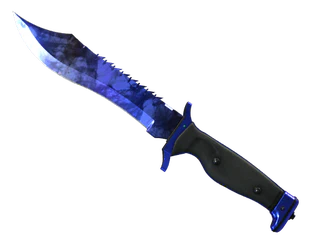
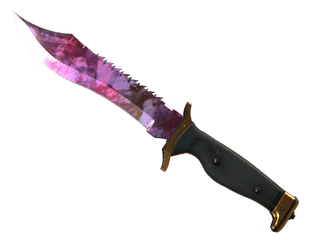
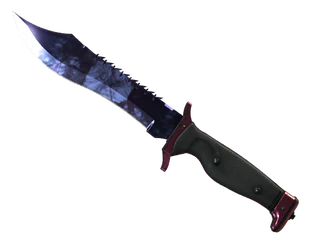
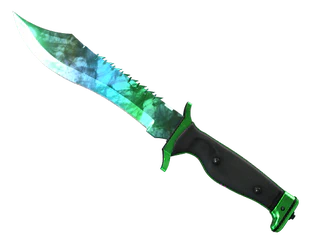
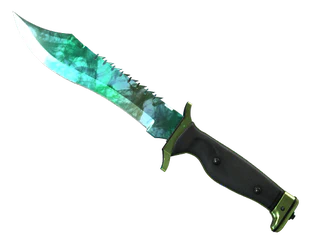
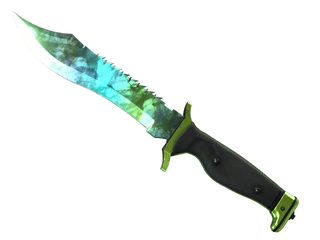
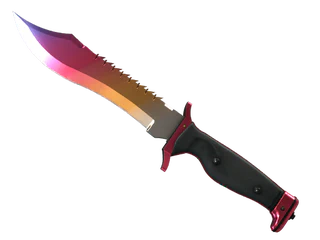
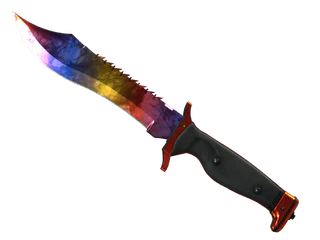
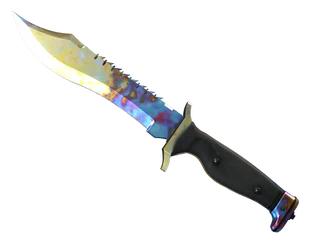
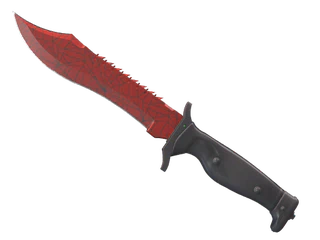
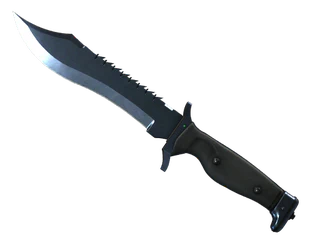
This blade is a phased Doppler-style finish, so phase variety affects how the blue and purple read in game. Some phases skew toward richer blues while others favor purple tones; that aesthetic split is what you price against, not an abstract rarity. Verify the visible phase before listing - the right phase can tip a sale toward a collector quicker.
Being covert supports a dependable baseline even on less desirable floats; the rarity tier props the low end above generic knives from mass cases. That rarity cushion matters when the market softens, because it keeps bids from evaporating completely. Sellers can lean on that when debating whether to accept an offer.
This bowie originates from the Spectrum Case, which shapes long-term supply and who actually owns copies on the market. Case origin narrows the pool of potential sellers and buyers compared with open crates, and collectors track that provenance when choosing entries. Use the case as shorthand when positioning a listing.
Anodized multicolored finish leans hard into blue and purple tones that pop on screen, making the blade read clean in matches and highlight reels. The designer name carries weight and the two-tone swing looks lively under match lighting, which attracts buyers who value on-screen presence over raw scarcity. It photographs well for listings.
Activity has been drifting down over the short window, with softer asks and slower clears. That softness is visible in lower urgency among buyers and more patience on listings. If you need to move a piece quickly, expect to price toward the bottom of the current bids.
The historical band for this blade is wide, so prices have moved across a large spectrum in different market environments. Right now the market sits away from the top extremes and closer to the middle-to-low side of that band. Sellers should set expectations to match a broad historical swing rather than a tight, stable band.
On a high-value knife like this, waiting for the right phase and a quiet lull in listings can materially improve outcomes; hurried sales typically accept the spread. Good timing means aligning a clean-looking copy with a moment when demand tightens, not listing into a glut. Traders with patience generally capture the premiums here.