
Karambit Blue Gem: Pattern & Price Guide

Table of Contents
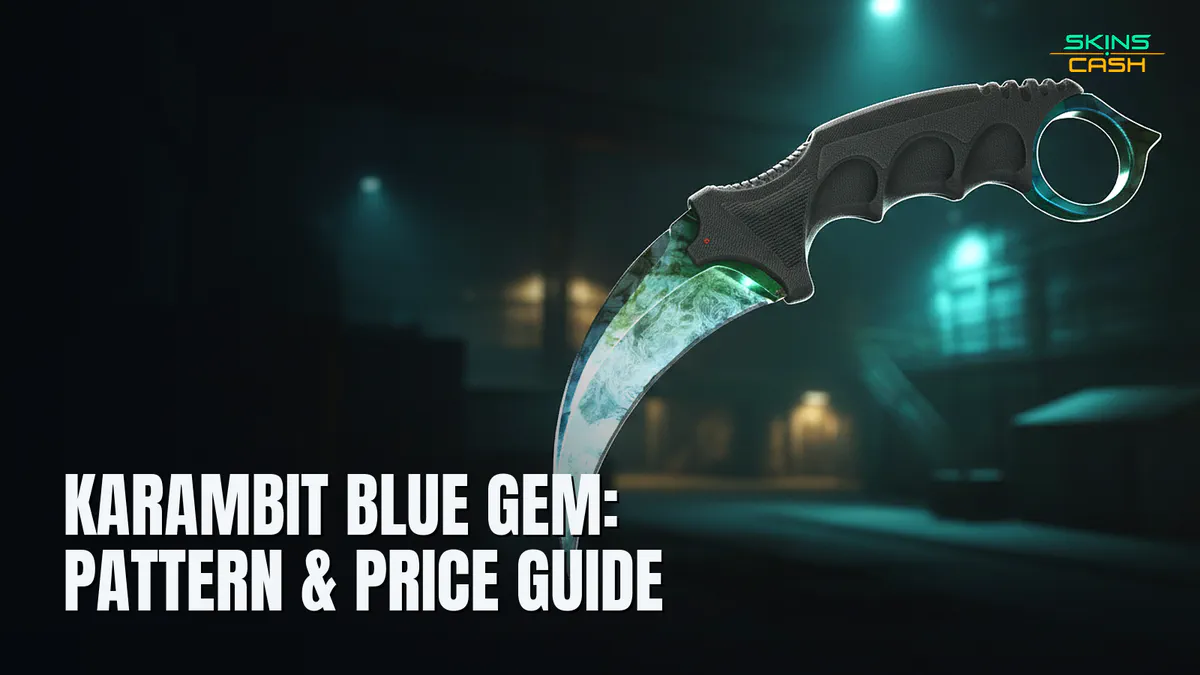
A blue gem karambit is a ★ Karambit | Case Hardened with a pattern index, also called a paint seed, that places an unusually large amount of blue on the visible blade face. That visible face is the playside. The pattern index is a permanent number from roughly 0–999 that controls the blue, gold/yellow, purple, and silver layout. A float is a separate decimal number that controls wear, from clean Factory New finishes to scratched Battle-Scarred ones.
The premium exists because the Case Hardened finish does not treat every seed equally in collector terms. A normal Karambit Case Hardened may show mixed gold and blue. A recognized blue gem can show a clean blue playside, sometimes across nearly the entire blade. Pattern #387 is the famous example, but it is not the only desirable seed.
Item facts such as rarity, float caps, and collection data come from the CS2 item database. Market levels are approximate as of 2026.
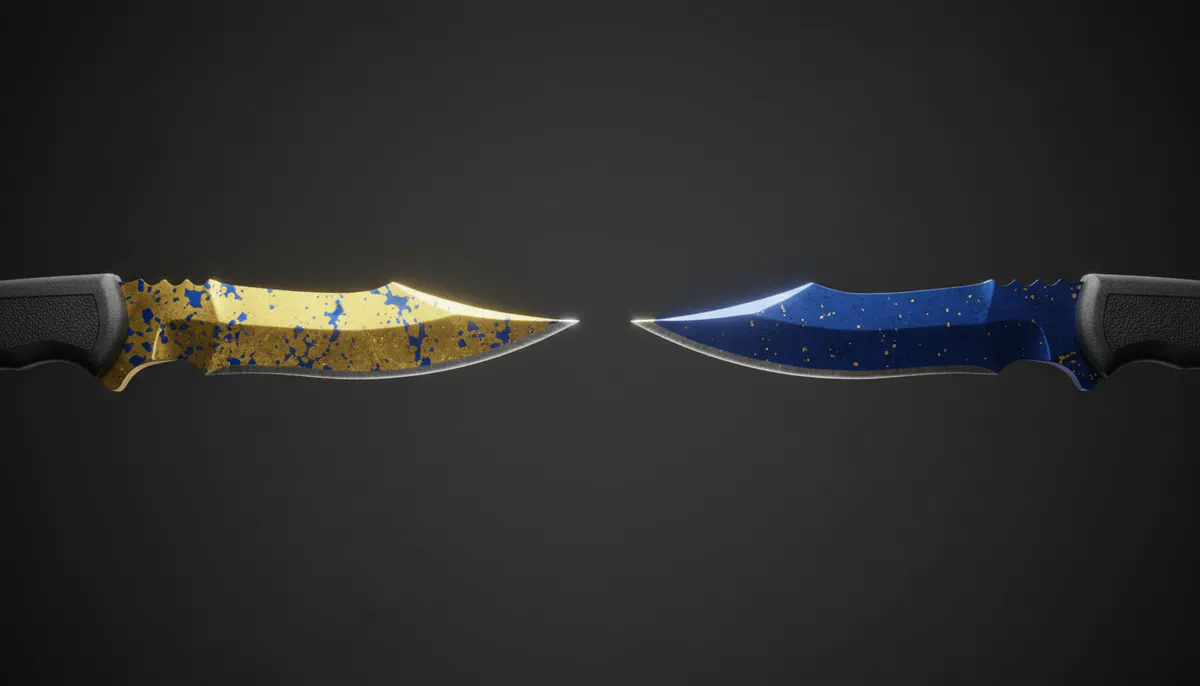
Karambit Blue Gem Variants at a Glance
A Case Hardened blue gem is a pattern-based collectible. Doppler gems and Fade percentages are different systems. Doppler uses visual phase outcomes. Fade uses a calculator-derived percentage that measures color placement, not a published rarity roll.
Phases, Tiers, and What the Numbers Actually Mean
The first important distinction is simple. A Karambit Case Hardened has seeds, not Doppler phases. A Karambit Doppler has phases, not blue-gem tiers. A Karambit Fade has pattern-dependent fade percentages.
Community labels are useful. They are not Valve classifications.
A particular Case Hardened seed is roughly one outcome in 1,000 seed positions. That is why seed #387 is often described as approximately 0.1% among Karambit Case Hardened seed results.
That number does not mean a 0.1% chance from any random case. First, a case must produce a rare special item. The shared weapon-case chance for a knife or gloves is 0.26%, about 1 in 385. Then the item model, finish, wear, StatTrak status where applicable, and paint seed all narrow the result further.
Knives are Extraordinary (★) rarity. They are not Covert. Covert is the top regular weapon-skin tier.
How to Identify a Blue Gem Karambit
Start with the actual item, not a seller title. “Blue Gem,” “Tier 1,” and “Hiko pattern” are collector shorthand. The hard in-game data is the Pattern Template number.
Check the Pattern Template in CS2
- Open the Karambit in your inventory.
- Choose Inspect.
- Open the item information panel using the small information icon.
- Find the Pattern Template value.
- Record the number and compare it with a Karambit-specific Case Hardened seed database.
- Inspect the playside and backside yourself.
A blue patch near the blade tip is not automatically a blue gem. Collectors generally look for blue as the dominant playside colour, clean contiguous coverage, minimal gold/yellow interruption, and strong positioning across the broad visible blade.
The backside can add substantial value. It should not replace playside inspection. A near-full-blue backside with a weak playside often sells into a narrower buyer pool.
Use Pattern-Index Sites Properly
Pattern-index sites can accept an inspect link or a manually entered seed. Select Karambit | Case Hardened specifically. The same seed can look completely different on an AK-47, M4A1-S, or another knife model.
Check four things before assigning a tier:
- Pattern Template number.
- Playside render.
- Backside render.
- The tier list used by that specific database.
A site may report a figure such as front-side blue coverage. Treat that as a rendering measurement, not an official value. One database might count blade pixels. Another may give more weight to clean blue through the center of the blade, blue at the tip, or reduced gold interruption.
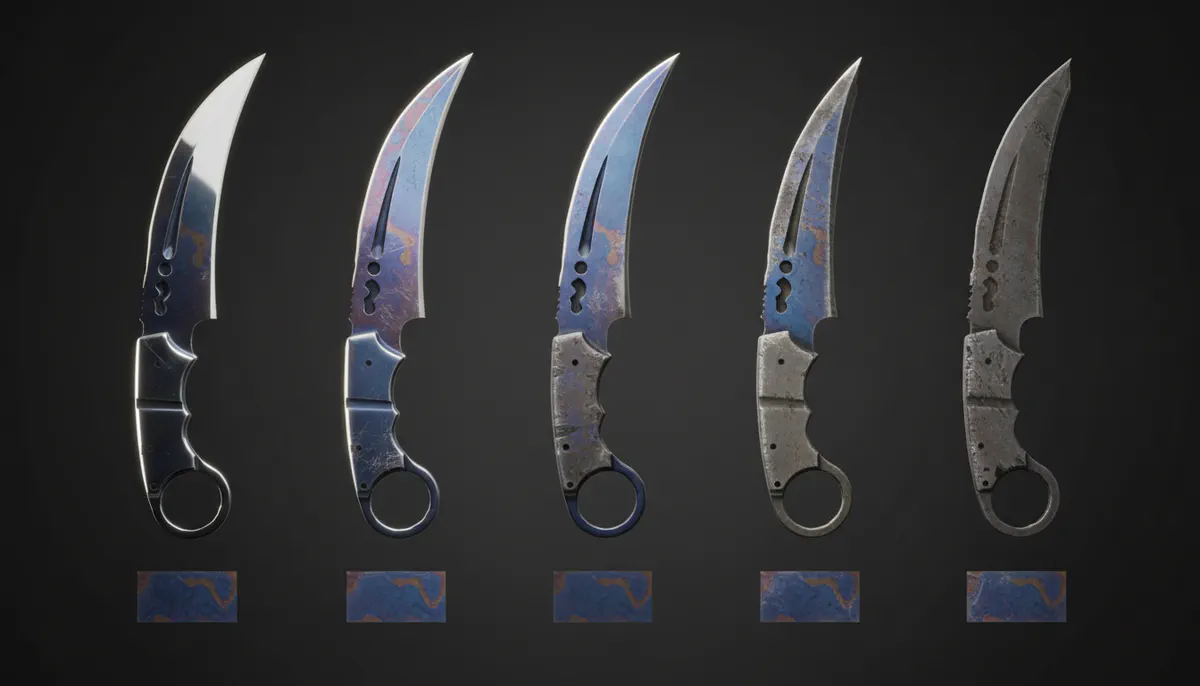
Separate Float From Pattern
Float and pattern index are different numbers with different jobs.
- Pattern index: controls where blue, gold/yellow, purple, and silver appear.
- Float: controls visible wear.
The standard wear tiers are:
A low float does not improve blue coverage. A Tier 1 seed does not guarantee Factory New condition. Both properties must be checked separately.
Also check the item definition’s float cap. A cap is not determined by the listings currently visible on a marketplace. For example, an item capped at 0.60 can reach both Well-Worn and Battle-Scarred because 0.60 extends past the 0.45 Battle-Scarred boundary.
Ranked Case Hardened Blue Gem Breakdown
1. Pattern #387, the reference blue gem
Pattern #387 is the best-known Karambit Case Hardened seed. Its playside is essentially all blue, which is why collectors commonly call it God tier, S tier, or the number-one blue gem.

Sell your CS2 skins for real money.
Its fame is not simply about being seed number 387. Any named seed is only one of roughly 1,000 possibilities. The defining feature is the clean, near-full blue playside layout.
A reported offer of roughly $1.5M for a #387 Karambit was reportedly declined. That was an offer, not a confirmed public sale. Pattern #387 also says nothing about float or StatTrak status. Those details belong to a specific item, not the seed itself.
For a seller, #387 should not be priced from an ordinary Karambit Case Hardened floor. It needs collector-level verification, an inspect link, ownership scrutiny, and patience. Fast liquidity and maximum collector overpay rarely happen at the same time.
2. Elite non-387 seeds: #442, #269, #321, #73, #955, #853, #902, #507, and #776
These seeds are frequently grouped as the next elite set under #387 in one widely used classification. They are commonly associated with roughly 90–99% playside blue, although exact rankings vary between pattern databases.
Seed #442 is one of the most recognizable high-blue alternatives. Seed #269 has special collector attention because its reverse side can also be unusually blue. Seed #73 and #321 are long-standing high-blue names, while #507, #776, #853, #902, and #955 appear in many modern elite lists.
The key selling point is not a generic Tier 1 label. It is the exact seed, blade cleanliness, visible blue placement, float, and whether the backside supports the playside.
Pro use is not the core valuation driver here. Collector recognition and comparable sales matter more than an undocumented association.
3. Tier 2: strong blue, but not full-blue
One published system identifies 31 Tier 2 seeds, or about 3.1% of Karambit Case Hardened seed outcomes. Examples include #905, #698, #670, #130, #828, #74, and #470.
These Karambits can show 80–89% playside blue under that system. They are often visually impressive, but the difference between a clean centered blue layout and a broken pattern with gold across the middle can be large.
Tier 2 is where sellers most often benefit from accurate presentation. Show both blade sides. Include the float. State the exact seed. A buyer who sees only “blue gem” may assume a stronger pattern than the item actually has.
4. Tier 3: recognizable blue-gem territory
Tier 3 usually means roughly 50–75% playside blue. One list includes 45 seeds in this category, about 4.5% of results. Examples include #262, #322, #463, #306, #575, #310, and #631.
This is a broad category. A clean 60% blue pattern may attract more interest than a technically higher figure where gold/yellow cuts through the most visible part of the blade. The visual layout is the product.
These pieces are more sensitive to market conditions than elite seeds. If a seller needs immediate real-money liquidity, the realistic cash-out value can be closer to the ordinary knife base plus a defensible pattern premium, rather than an ambitious collector listing.
5. Tier 4 and blue-accent patterns
Tier 4 covers the entry-level end of community blue-gem classification. One published list contains 72 seeds, about 7.2% of outcomes, with examples such as #25, #38, #335, #727, #405, #595, and #961.
Under roughly 50% playside blue can still look good in-game. It does not always command a lasting blue-gem premium. Sellers should be careful with labels here. A buyer may pay extra for a clean blue accent pattern, but only if the seed is recognized and the price remains grounded.
This tier is usually easier to compare against normal Karambit Case Hardened sales. That makes it more practical for a fast cash-out than a unique Tier 1 collector knife, though the final offer still depends on condition and current demand.
Doppler Gems and Fades Are Not Blue Gems
Doppler Ruby, Sapphire, and Black Pearl Karambits are often grouped with blue gems because they are high-end “gem” knives. Mechanically, they are different.
A Doppler phase is the finish outcome that determines the blade’s visual phase. Valve has never published phase rates. Community inventory samples generally treat Phases 1–4 as roughly comparable in frequency, while Ruby, Sapphire, and Black Pearl are the rare outcomes. Black Pearl is generally considered rarer than Ruby or Sapphire, but rarity does not force a fixed price order.
A Fade percentage is also not an odds figure. It is a calculator score for how much of the desired gradient appears on the Karambit blade. The commonly discussed range runs from about 80% to 100%. Named max-fade seeds and “true 90/10” terminology differ by calculator, so a seller should always provide the seed and the tool used.
Value, Famous Specimens, and Sale Claims
The #387 Karambit Case Hardened is the headline example because it combines a famous seed with an almost entirely blue playside. Its reported seven-figure offer is often repeated as a sale. It was not a confirmed public sale.
That distinction matters across the high-end CS2 market:
- A Factory New stickered Souvenir AWP | Dragon Lore is widely reported to have reached around $61K. The figure is widely cited, but higher private-sale claims are also routine and not documented.
- An AK-47 | Case Hardened pattern #661 is the most sought-after AK blue-gem seed. Figures range from tens of thousands to seven figures in public discussion, so no seven-figure sale should be treated as fact.
- The M4A4 | Howl matters because it is Contraband. It was pulled from the Huntsman Case after an art dispute, and no new copies drop.
For Karambit sellers, the practical lesson is clear. A public listing, a private offer, an estimated valuation, and a confirmed completed sale are four different data points. Do not use them interchangeably.
FAQ
What is the best blue gem karambit pattern?
Pattern #387 is widely treated as the top Karambit Case Hardened blue-gem seed because it has an essentially full-blue playside.
How rare is Karambit Case Hardened pattern #387?
A single seed is roughly one result in 1,000 Case Hardened seed outcomes, or about 0.1% after already receiving a Karambit Case Hardened. That does not equal the chance from opening a case.
Is a blue gem Karambit the same as a Sapphire Doppler?
No. A blue gem normally means a Case Hardened seed with high blue coverage. A Sapphire is a special Doppler phase outcome. They use different finish systems.
Does float affect the blue-gem pattern?
No. Pattern index controls the blue, gold/yellow, purple, and silver layout. Float controls wear. A low float can improve condition but cannot turn a normal Case Hardened seed into a blue gem.
How do I check a Karambit blue gem seed?
Inspect the knife in CS2, open item information, find Pattern Template, then compare that seed with Karambit-specific pattern databases. Inspect both playside and backside before valuing it.
Are Tier 1 blue-gem labels official?
No. Valve does not publish blue-gem tiers or official blue-coverage boundaries. Tier labels are community conventions, and the same seed can rank differently across databases.
Should I sell a Tier 1 Karambit blue gem instantly?
That depends on the priority. An instant cash-out provides speed and certainty, while a private collector sale may take longer and require stronger proof of seed, float, and pattern quality. Elite seeds deserve extra comparison before accepting any offer.